Pool Pumps
The main pump is the heart of your pool. It is the one piece of equipment everything else depends on, so when it starts to struggle, the whole pool feels it. Understanding how your pump works makes it a lot easier to know when something is wrong and what to do about it.
What does a pool pump do?
Think of the main pump as the heart and the plumbing as the veins and arteries. The pump pulls water from the pool through the skimmer and main drain, pushes it through the filter, through the heater and salt cell if you have them, and sends it back to the pool through the returns. Every time the water in your pool turns over, the pump is what moved it.
Because the rest of your equipment sits downstream of the pump, the pump affects all of it. The filter only cleans water the pump pushes through it. The heater only warms water the pump circulates. The chlorine or salt system only sanitizes water that is moving. When the pump slows down or stops, the whole system slows down or stops with it. That is why a pump problem is important to address quickly, even when the pool still looks fine.
What are the different pumps on a pool?
Most pools run on a single main circulation pump, the one that moves water through the filter and the rest of the equipment. It is the pump people usually mean when they say "pool pump," and it is the one this page mostly focuses on. But a pool can have more than one pump, each with its own job.
Main Circulation Pump
Moves the water through the filter and equipment and back to the pool. Most pools have one. Very large, custom, or vanishing-edge pools sometimes have several.
Cleaner or Booster Pump
Gives a pressure-side pool cleaner, like a Polaris, the extra power it needs to move around the pool and scrub the surfaces.
Water Feature Pump
Runs fountains, waterfalls, deck jets, sheer descents, and other water features. These pumps are usually set up to operate on their own so the feature can run independent of the main pump.
Spa Jet Pump
On a pool and spa combo, there is sometimes a high-flow pump that powers the spa jets when you switch the system over to spa mode, to create the jet action in the spa.
In-Floor Cleaning System Pump
Moves water through the in-floor cleaning system so the pop-up heads built into the pool floor move and push debris across the floor.
Some equipment setups have other pumps beyond these, depending on how the pool was built. This page is more about the main circulation pump, because it is the one that every pool depends on. If you are not sure which pump is giving you trouble, give us a call and we will help you figure it out.
What are the signs of a failing pool pump?
The most common signs of a failing pool pump are loud or unusual noise, weak water flow, a pump that will not start, leaking water, and a pump that shuts off on its own. A pump usually doesn't just fail all at once; it usually shows one of these signs first. Here is what each one tends to point to.
Loud or unusual noise
Grinding or screeching usually means the bearings are wearing out. A rattle can mean there is debris in the impeller. The noise will not go away on its own, and it usually gets worse over time. Worn bearings point toward replacing the motor or the pump, so it is worth having the noise looked at before the motor fails completely.
Weak water flow
If the pump is moving less water than it normally does, the cause is often a clogged impeller, a motor that's wearing out, a suction side air leak, a dirty filter or possibly a few other things. Low flow means your filter cannot do its job and the pool won't get proper circulation, which can lead to algae and other problems.
Pump will not start
A pump that hums but will not turn over is generally a failed capacitor, but can also indicate a seized motor shaft. If the pump does nothing at all, it can point to an electrical issue or a motor that has completely failed.
Leaking water
Water dripping from where the motor meets the pump housing is usually a worn shaft seal. Small leaks grow, and eventually could cause the pump to fail. The discharge side of the pump and the housing O-ring are also two common spots where leaks occur.
Shutting off on its own
A motor that overheats will shut itself off to avoid damage. That often points to airflow problems, a failing capacitor, a motor working harder than it should, or a motor that is failing.
Rising electric bill
An older single-speed pump draws a lot of power, and a pump that is struggling draws even more. A higher than normal electric bill can be a sign that the pump is on its way out.
If you are experiencing any of these signs, a Pool Equipment Diagnostic is the place to start. We come out, find the cause, and explain what we found, and no work happens without your approval.
Which pump parts wear out?
The pump parts that most often wear out are the shaft seal, the pump housing, the capacitor, the bearings, the impeller, the diffuser, and the motor itself. A pump is a motor connected to an impeller, which is covered by a diffuser, inside a sealed housing, so most problems come down to one of these things. Knowing what each one does helps you understand what your Technician is talking about when they explain a repair.
Shaft Seal
The shaft seal keeps water on the wet side of the pump and away from the motor. When it wears out, water starts leaking from the spot where the motor meets the pump housing. A small drip under the pump is often a failing shaft seal, and it is one of the more common pump repairs.
Pump Housing
The housing is the body of the pump, and the side that the water goes through. Over time it can crack, warp from heat, or develop leaks at the lid O-ring, suction side, or the discharge side. A cracked housing usually means a new pump.
Capacitor
The capacitor gives the motor the jolt it needs to start spinning. When it fails, the pump often hums but will not start, or it starts slowly. A humming pump that will not turn over is often a failed capacitor, and on many motors it is a straightforward part to replace.
Bearings
Bearings let the motor shaft spin smoothly. As they wear, the pump gets loud, usually a grinding or screeching sound that gets worse over time. In practice, worn bearings are not repaired on their own; the fix is a new motor or a new pump, which is why it is worth having the noise checked before the motor fails completely.
Impeller
The impeller is the spinning part inside that actually moves the water. Debris and small objects can clog it, which can cause your water flow to drop even though the motor is running. A pump that runs but circulates poorly sometimes has a clogged, broken, or worn impeller.
Diffuser
The diffuser sits over the impeller and directs the water the impeller is moving, which helps the pump build pressure. When the diffuser cracks or its gasket fails, water recirculates inside the pump instead of being pushed out, so your flow and pressure drop even though the motor and impeller are running fine. The diffuser is usually a straightforward part to replace on its own.
Motor
The motor is the part that drives everything else. Motors can fail from age, from a bearing that has failed, from electrical issues, and a number of other reasons. When the motor itself has failed, the conversation usually shifts from repair to replacement, which is where the variable-speed rule below comes in.
Why are new pool pumps variable-speed?
If your pump needs to be replaced, the new one will almost certainly be variable-speed. A federal Department of Energy regulation that took effect in 2021 set efficiency standards that most single-speed pumps cannot meet, so the pumps available for replacement today are variable-speed.
A variable-speed pump runs at different speeds instead of just on or off. For most of the day it runs slowly and quietly, which uses far less electricity and is easier on the equipment. It speeds up only when a task needs more flow. The result is a quieter equipment pad, a lower power bill, and better water filtration, which is part of why these pumps were favored even before the rule.
If your pump needs replacing, the new one will be variable-speed, and we will walk you through what fits your pool. Some customers choose to upgrade to variable-speed while their old pump still works, for the energy savings. Either way, we will talk through the options and help you decide what makes sense.
Pumps we install and service.
We are authorized providers and install the brands below. If you would like to confirm a specific brand or model, give us a call at 832-473-5715.
These are the most common variable-speed pumps we install. If you are trying to figure out what pump you have, this can help you identify which one.
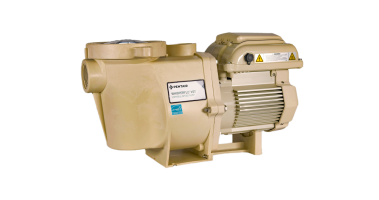
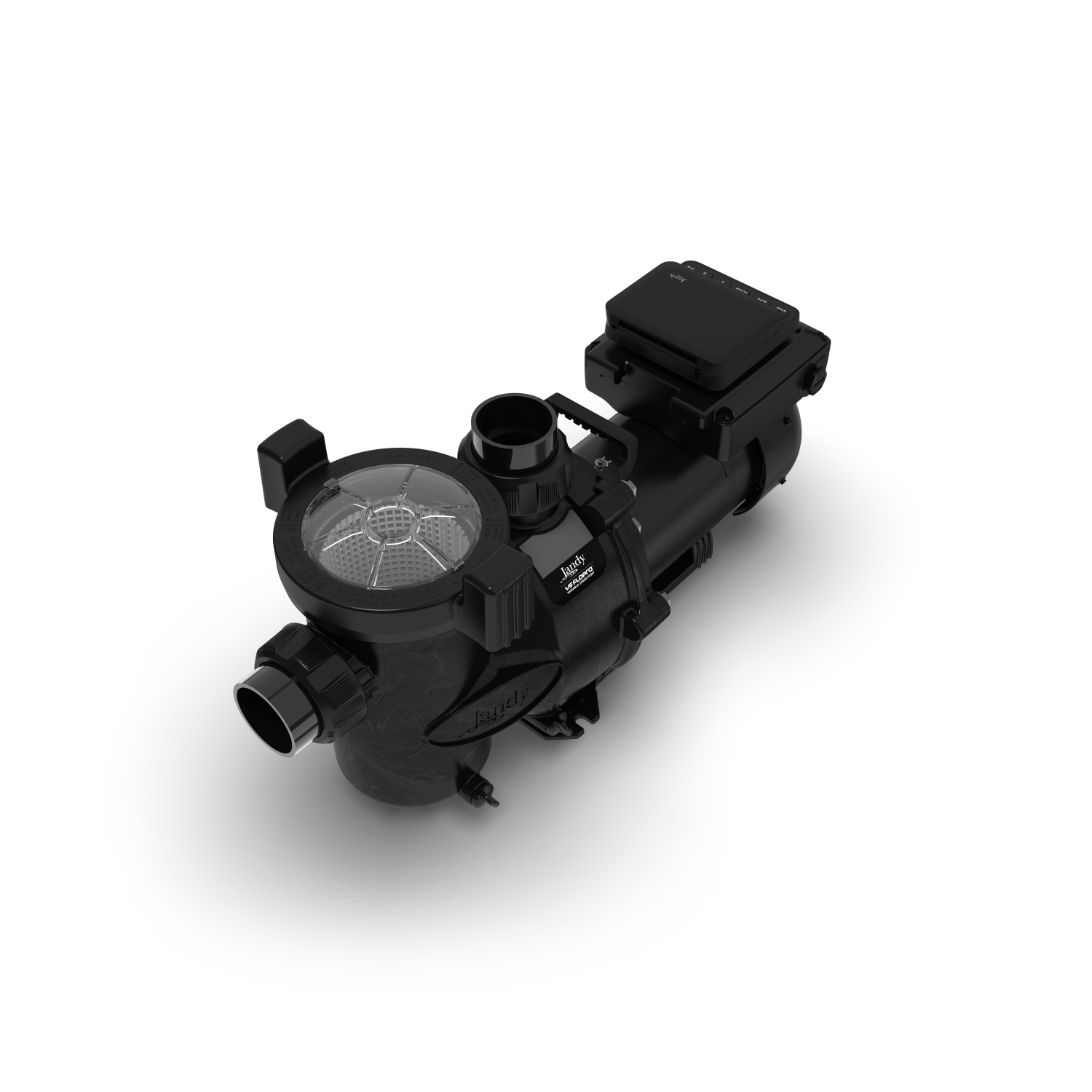
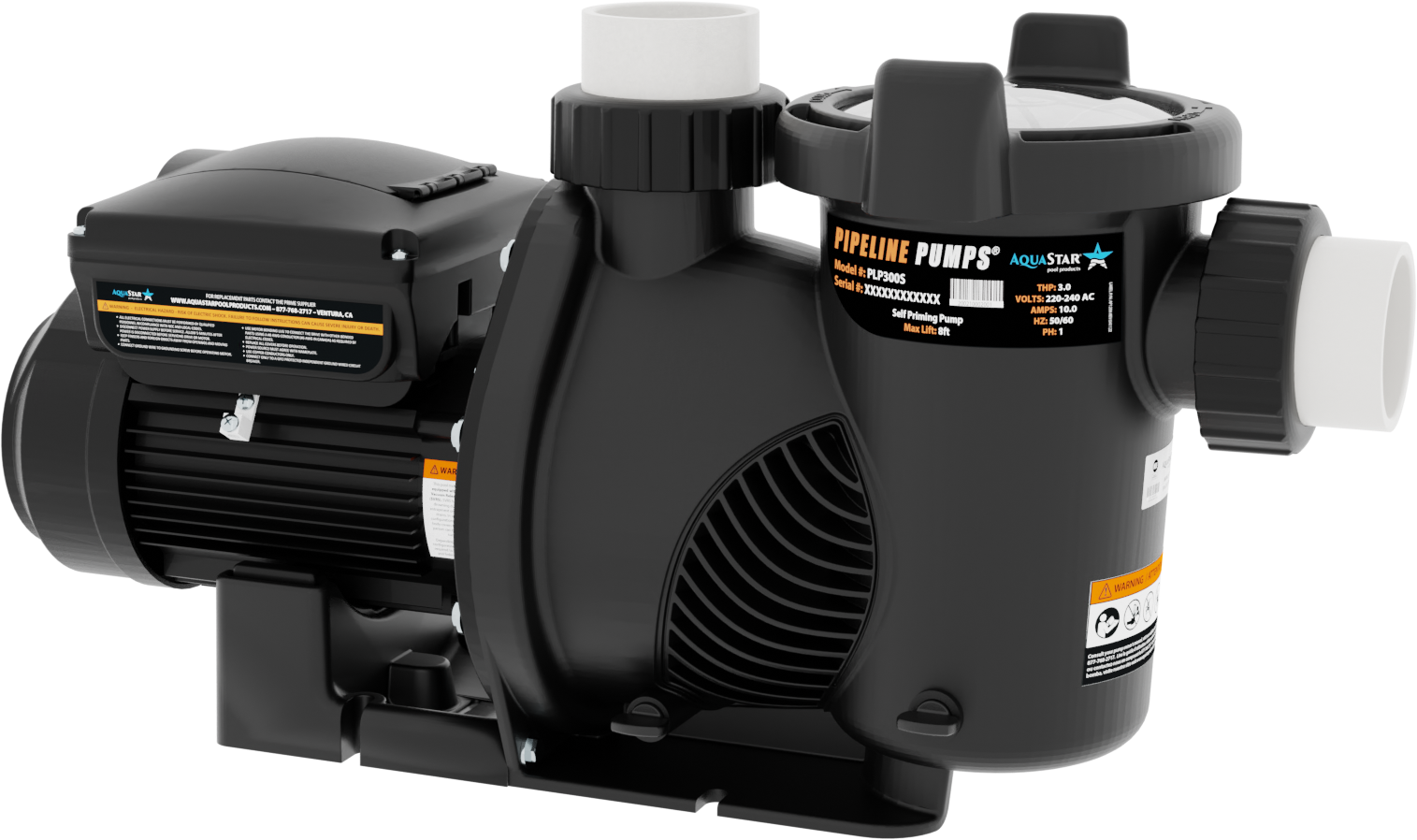
Not sure which pump is right for your pool? We will talk through the options with you during the diagnostic and make any recommendations.
How do you make a pool pump last?
A pump that is looked after lasts longer than one that is not, and a few habits help. Keep the pump basket clean, because a basket packed with leaves makes the pump work harder for less flow. Keep the area around the pump clean too, because these motors create heat and need airflow around them to not overheat. And try to never let the pump run dry, which means keeping your water level up and your skimmer baskets clean so the pump always has water to pull.
Most of this happens on its own when your pool is on a weekly route. During a TotalCare™ Weekly visit, your Technician empties the baskets, keeps an eye on how the pump is running, and watches for small changes, a new sound or a weep at the seal, that tend to show up before a failure does. Identifying any of these early on often means a smaller, less expensive fix, rather than waiting until the pump fails completely.
Frequently Asked
Questions about pool pumps.
Most pool pumps last somewhere between 5 to 10 years, though it depends on the brand, how many hours a day it runs, and the conditions at your equipment pad. A pump that runs long hours in full sun will wear faster than a pump that is in the shade all day. When a pump reaches the end of its life, it usually shows it first through noise, leaks, or trouble starting up.
A loud pump is usually telling you that the bearings inside the motor are wearing out. A grinding or screeching sound points to bearings, a rattle can mean debris in the impeller, and a humming pump that will not start often points to the capacitor. Noise is worth a call. Worn bearings are not repaired on their own; the fix is a new motor or a new pump, so it is worth having the noise checked before the motor fails completely. If you hear any strange noises, give us a call.
For most pools, yes, when it is time to replace the pump. A federal Department of Energy regulation that took effect in 2021 means almost all replacement pumps sold today are variable-speed. If your current pump still works, you are not required to change it. The rule applies when you replace the pump, not while your existing one is running.
Most pump problems are repairs. A worn shaft seal, a failed capacitor, or a clogged impeller can often be fixed without replacing the whole unit. When the motor itself has failed or the pump is near the end of its life, replacement is usually the better option. We diagnose first, explain what is failing and what each option would cost, and then leave the decision to you. When a replacement involves the electrical connection at the pad, that part of the work is handled by a licensed Technician.
Every pump job starts with a Pool Equipment Diagnostic, which is $130. A Technician comes to your pool, finds what is actually wrong, and explains it before any repair happens. The diagnostic is a standalone fee and is not applied toward the cost of the repair. You will know what you are looking at, and what the repair would cost, before any work starts.
It depends on the repair. A capacitor or a seal is often a short job, while a motor replacement can take longer. In many cases we carry common parts on the truck, so a lot of repairs can be finished on the same visit. If a part has to be ordered, we will tell you that up front and schedule the return.
Our workmanship is guaranteed. We have a 60-day labor warranty on repairs and installs, so if a repair fails because of the work we did within that window, we make it right. Parts are covered under the manufacturer warranty.
Is something wrong with your pump?
If your pump is leaking, loud, or not operating, give us a call at 832-473-5715, or contact us online. We will schedule a Pool Equipment Diagnostic and figure out what is going on.
Request Equipment Service- 4.9 Google
- BBB A+
- Since 2011
- 100% Digital Reports
- Lic. TICL728