Pool Filters
As your pump circulates water through your system, that water passes through your filter. Inside the filter, dirt, debris, and fine particles get trapped by the filter media, and the clean water returns to the pool. There are three types of residential pool filters: cartridge, DE, and sand. Understanding how the pool filter works makes it easier to keep your water clean and identify a problem before it gets worse.
What does a pool filter do?
A clean pool comes down to three things working together: circulation, filtration, and chemistry. Circulation is your pump moving the water. Chemistry is the sanitizer and balance that keep the water safe. Filtration is the filter pulling the dirt, debris, and fine particles out as the water passes through. Take any one of the three away and the water suffers, which is why a filter problem shows up fast, usually as cloudy water, even when your chemistry is right where it should be.
What are the different types of pool filters?
There are three main types of pool filters: cartridge, DE, and sand. Each type filters the water to a different level of fineness and requires a different kind of upkeep. Most backyard residential pools around Houston use cartridge or DE filters, but all three are common, and the right one depends on how clear you want the water and how much maintenance you want to do.
Cartridge Filter
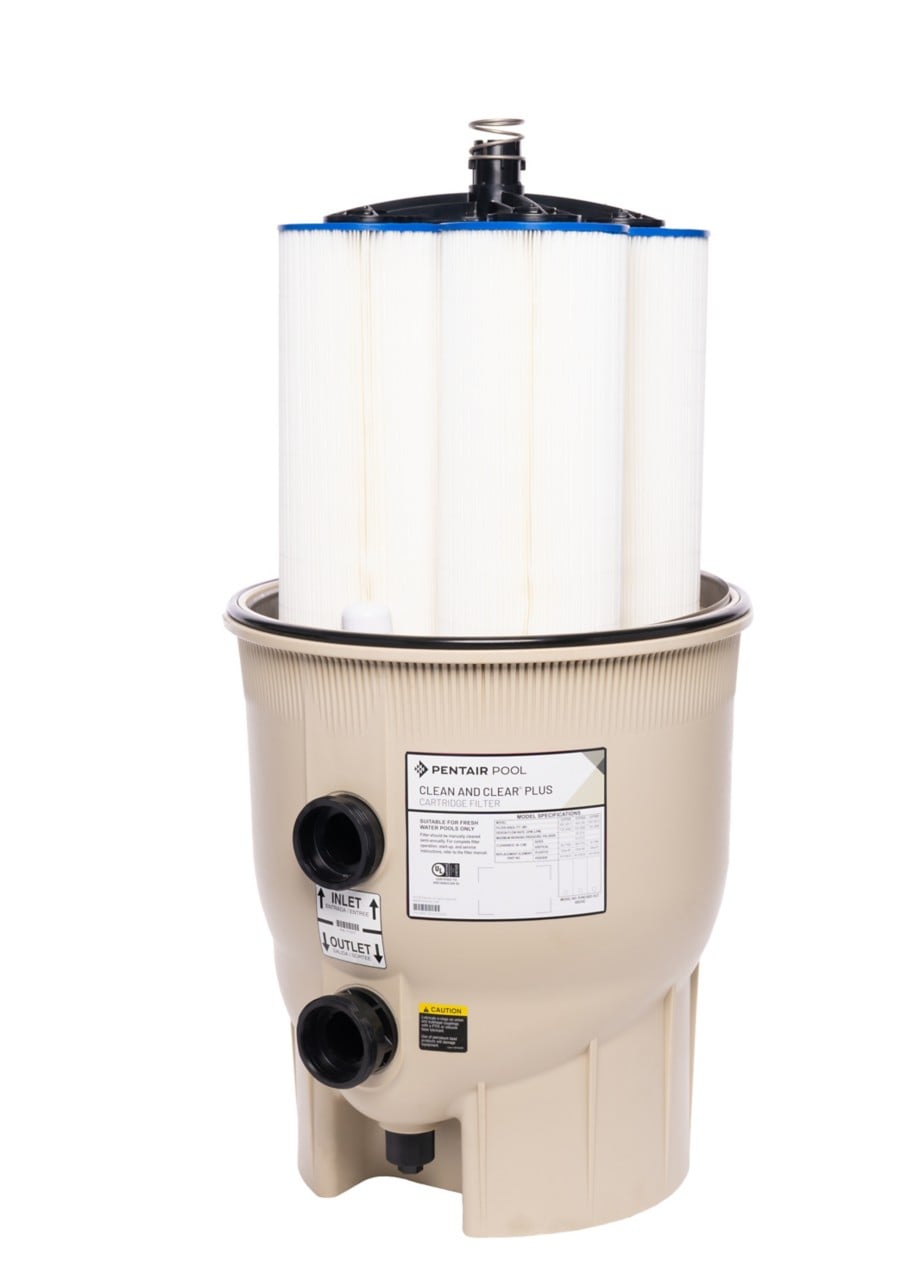
Uses a pleated cartridge inside the tank to trap dirt as water passes through. It filters finer than sand and does not need backwashing, which saves water. You clean it by pulling the cartridges and rinsing them down with a hose. Some have a single cartridge, some have 8 cartridges, generally we see 4 cartridges. It is one of the two most common types on backyard pools around Houston.
DE Filter
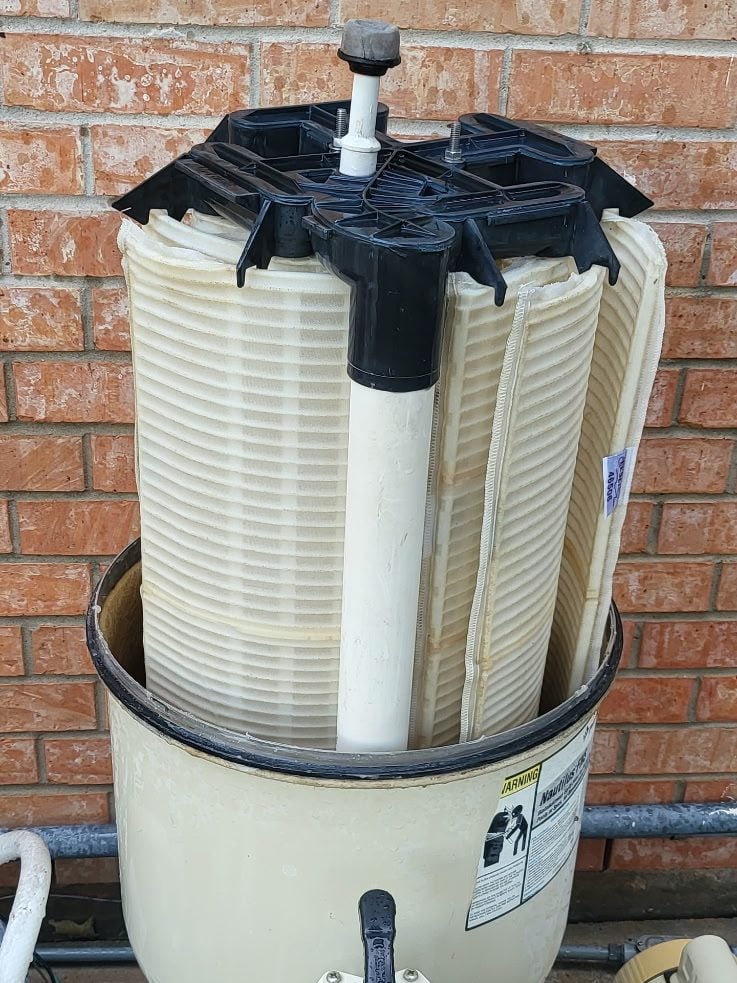
Uses a fine powder called diatomaceous earth, coated onto internal grids, to catch the smallest particles of the three types. It gives the clearest water. After cleaning, fresh DE powder has to be added back to recoat the grids. You clean it by disassembling the filter and hosing dirt, debris, and old DE off of each grid. There are 8 filter grids in most DE Filters.
Sand Filter
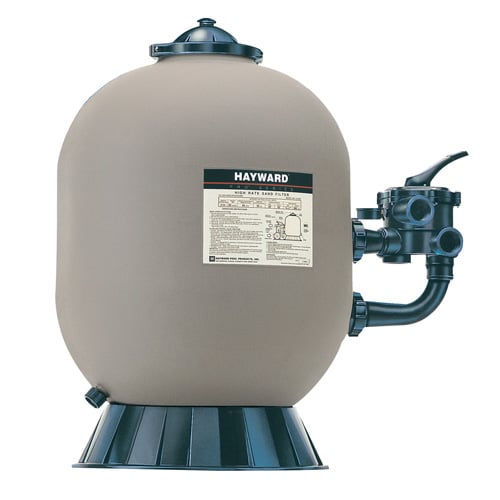
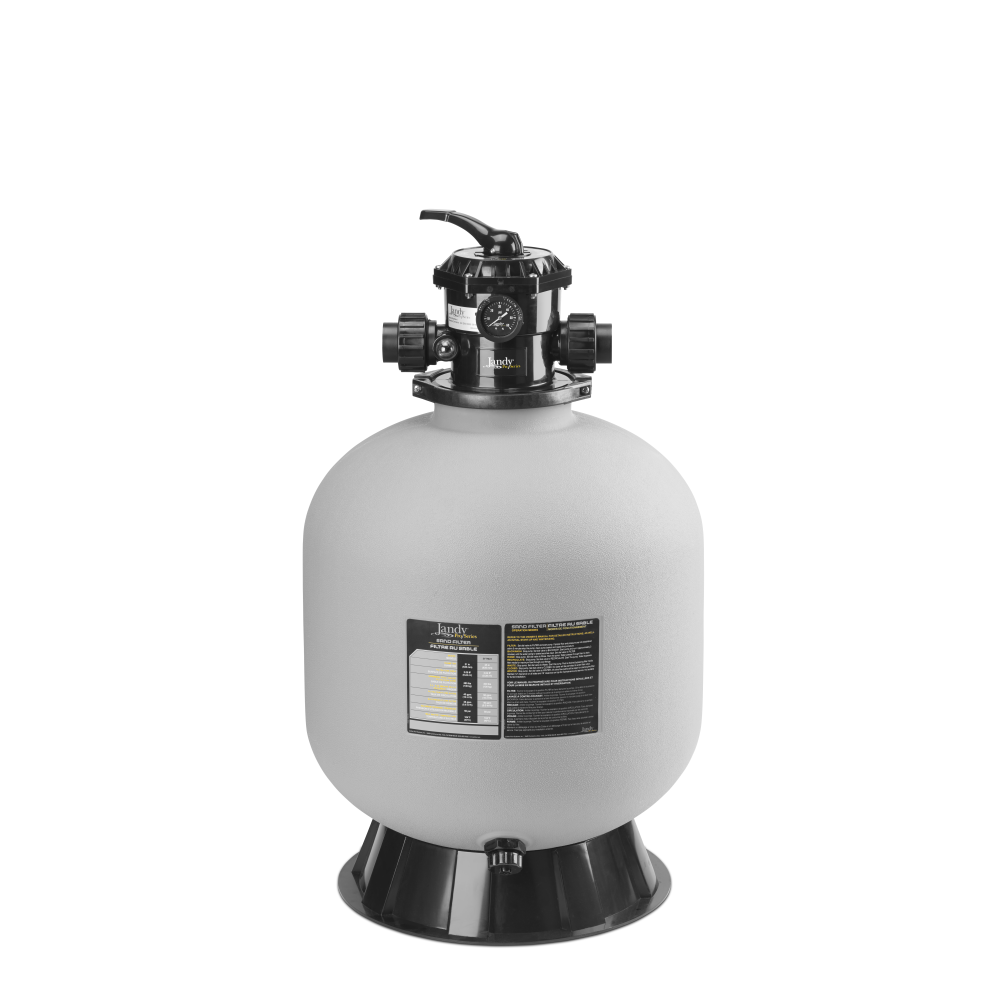
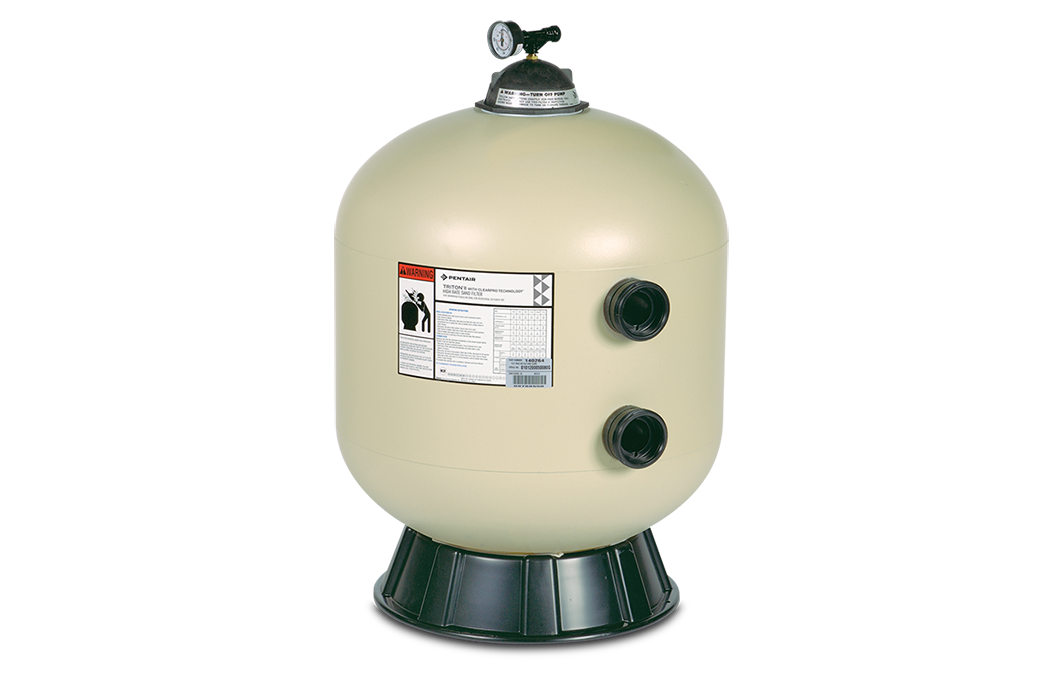
Pushes water through a bed of special filter sand or glass media that traps debris between the grains. It filters the least finely of the three. Periodically you can clean it by backwashing, reversing the flow and stirring up the sand bed to flush the trapped dirt and debris out of a waste line. Every so often, 3 to 5 years or so, the sand has to be completely removed from the filter and replaced with new sand. Performing a sand change is a labor intensive job, more so than DE or cartridge.
If you are not sure which type you have, give us a call at 832-473-5715 and we can help you figure it out.
What are the signs your pool filter needs attention?
The most common signs that your pool filter needs attention are cloudy water that will not clear up, a pressure gauge reading higher than normal, shorter and shorter stretches between backwashes, constant algae battles, debris getting past the filter, weak return flow, leaking around the filter, and sand or DE coming back into the pool. The pressure gauge will catch some of these, but not all. Plenty of filter problems never move the gauge, and often it is time and experience that tell us something is off. Here is what each sign tends to point to.
Cloudy water that will not clear
When the water stays cloudy even though your chemistry is balanced, the filter is usually the reason. It can mean the filter just needs cleaning, but if it stays cloudy after a cleaning, the elements inside could be torn or worn out, or the filter may be undersized for the pool. Cloudy water that good chemistry will not fix can indicate a filter issue.
High pressure gauge reading
A pressure gauge showing eight to ten psi above the normal clean reading generally means that the filter is dirty and due for a cleaning or backwash. High pressure means less flow through the filter, so the pool does not circulate like it should. If the pressure climbs back up shortly after cleaning or backwashing, it can mean that the cartridges, DE grids, or sand need to be replaced.
Shorter stretches between backwashes
If you find yourself cleaning or backwashing more and more often to keep the pressure down, the elements inside the filter could be the issue. Cartridges flatten and tear, sand packs down, and DE grids break and tear. When the time between filter cleanings keeps shrinking, the filter is working harder for less, and the elements are likely near the end of their life.
Constant algae battles
Algae usually starts as a chemistry problem, but a filter that cannot properly filter out dirt and debris will contribute to algae issues. If you balance the water and treat the algae and it continues to come back, the filter may not be pulling out the fine particles and contaminants the way it should. A filter that is undersized, dirty, or has worn out elements can leave you battling algae, regardless of what you put in the pool.
Debris getting past the filter
When you see dirt and fine particles passing back into the pool through the returns, it means the filter is not catching what it should. This usually points to cracked or torn cartridges, DE grids, or sand filter laterals. Until the filter is opened and the failed part is identified, debris will continue to pass back into the pool.
Weak return flow
Weak water flow is one of the most common signs of a filter issue. It usually means the filter is dirty and needs cleaning or backwashing. Good circulation is what lets the filter and the chemistry do their job, so weak flow should be addressed before your water starts to suffer.
Leaking around the filter
Water dripping from the filter is often the tank band clamp or the tank O-ring, which can crack and dry over time. A leak at the multiport valve can mean a failed top key assembly or O-ring. A leak at the top of the filter can indicate a failure with the air relief assembly. Small leaks tend to grow, so it is important to address them before they get worse.
Sand or DE coming back into the pool
Finding sand or DE powder on the pool floor or blowing from the returns means the filter is losing its media into the pool. On a DE filter it is usually a torn grid. On a sand filter it is often a cracked or broken lateral. On either one, a worn multiport spider gasket can let media pass through. This issue requires the filter to be opened up, to find and fix the cause.
These are the most common signs, but they are not the only ones. If your filter is not working right, even if what you are seeing is not on this list, a Pool Equipment Diagnostic is the place to start. We come out, find the cause, and explain what we found, and no work happens without your approval.
Why does a pool filter need regular cleaning?
Your pool filter works by pulling dirt and debris out of the water as it passes through the filter media. The media is the material that does the filtering: a pleated cartridge, a bed of sand, or DE powder.
As the media traps debris, flow tends to drop and pressure climbs. A dirty filter works your pool pump harder, does a poor job of filtering, and wears parts out faster. The pressure gauge is a signal: when it climbs about eight to ten psi above its starting reading, the filter needs cleaning.
How that cleaning is handled depends on the type. A cartridge filter has its cartridges removed and hosed down with water. Sometimes the cartridges are soaked to pull out the oils and sunscreen that rinsing alone won't remove. A sand filter is backwashed, and the sand itself is replaced every few years once it packs down and stops filtering properly. A DE filter is backwashed too, but the actual cleaning requires it to be opened up and the grids hosed off. Once cleaned, fresh DE powder must be added back to the filter.
How often a filter needs cleaning depends on the pool and its surroundings. As a baseline we recommend cleaning your filter every quarter, though some pools need it more often. The backyard environment, sun exposure, how much the pool is used, pets in the water, nearby trees and vegetation, and whether the pool runs year round all affect how quickly a filter loads up.
A pool filter also holds water under pressure, and a lid or clamp that is not seated correctly can come apart with real force and cause serious injury. This is not a job to rush or guess at. With our FilterCare™ service, we take the filter apart, clean it correctly, put it back together safely, and make sure it is running correctly before we leave.
Filters we install and service.
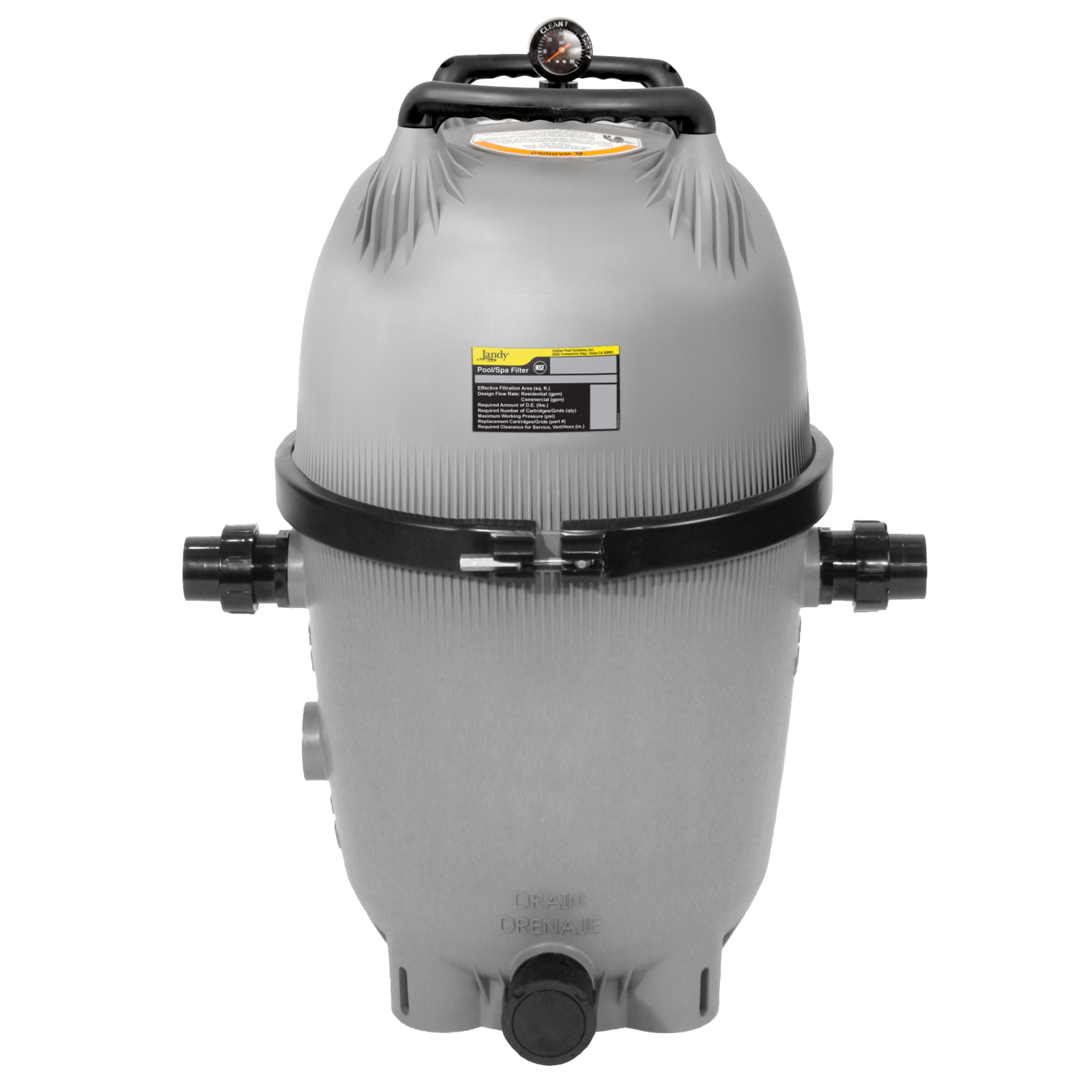
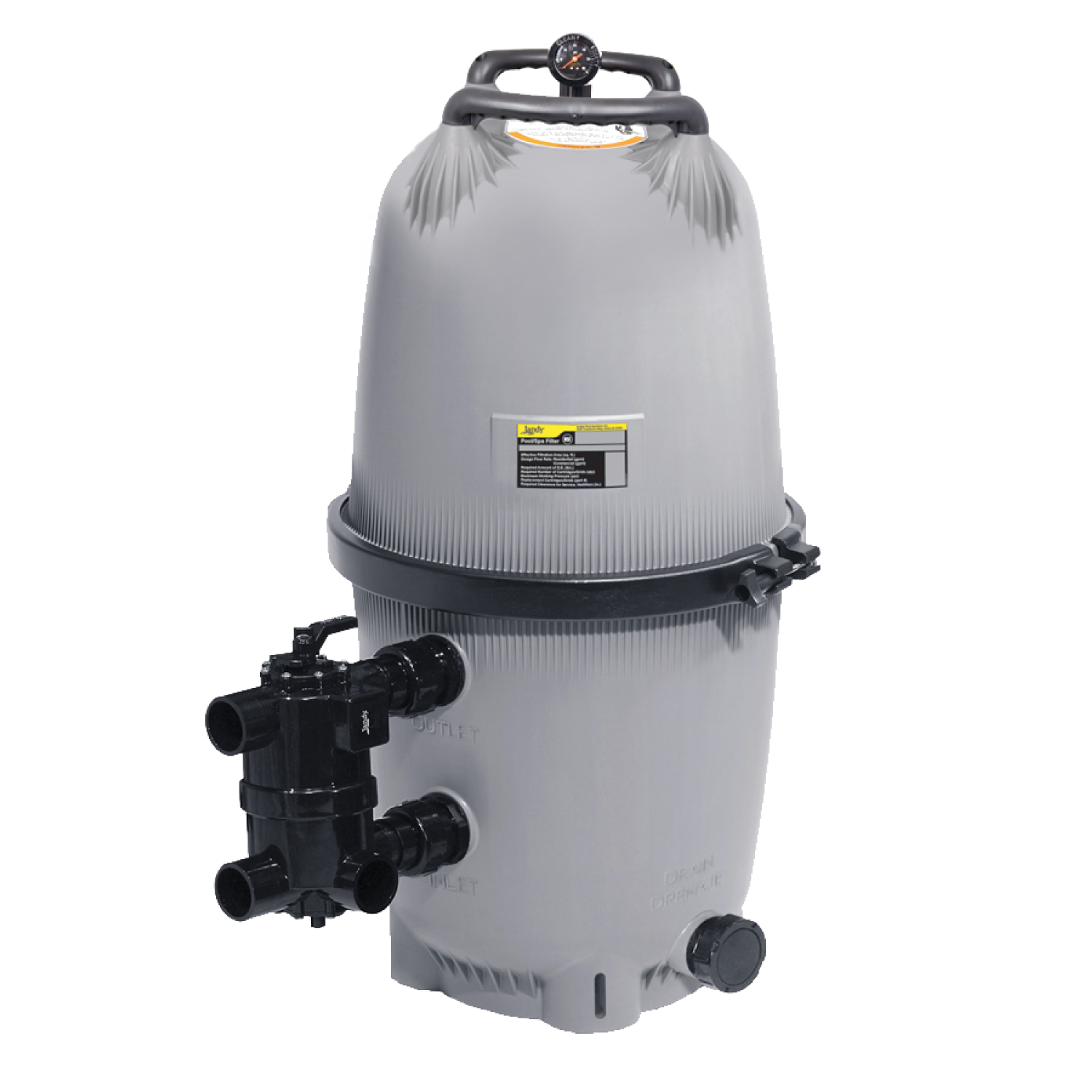
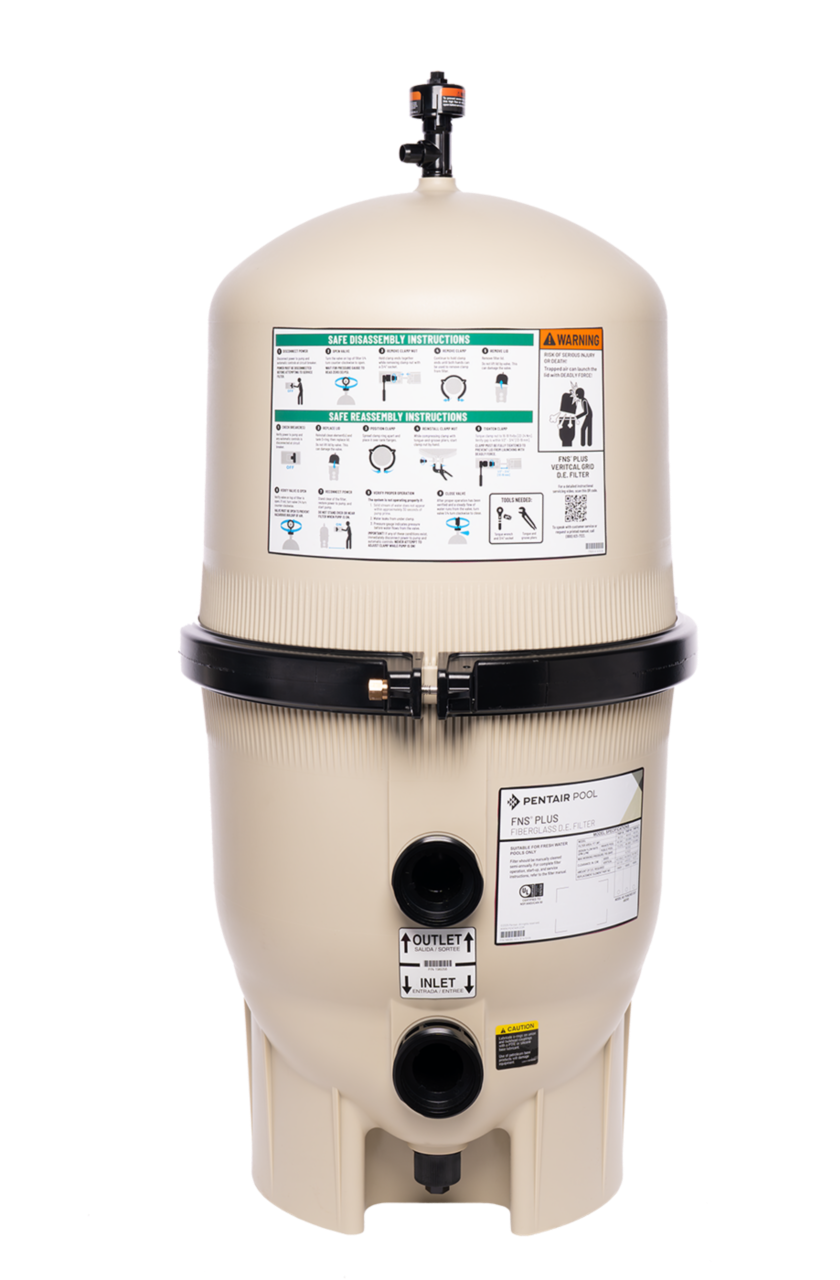
We are authorized providers for the brands below, and these are the filters we install and service most often. If you are trying to figure out what filter you have, this can help you put a name to it. This is not a complete list, so if you do not see yours or want to confirm a specific model, give us a call at 832-473-5715.
Cartridge Filters
DE Filters
Sand Filters
Not sure which filter is right for your pool? We will talk through the options with you during the diagnostic and make any recommendations.
Frequently Asked
Questions about pool filters.
For routine maintenance we recommend cleaning your filter every quarter. Some pools may need filter cleanings more often depending on a few factors. How fast a filter gets dirty depends on the pool and its surroundings: how much the pool is used, sun exposure, pets in the water, nearby trees and vegetation, the backyard environment, and whether the pool runs year round. The pressure gauge is a guide, but doesn't always indicate that a filter needs cleaning. When the pressure climbs about eight to ten psi above its starting reading, the filter is telling you it is time to clean it, no matter the schedule. Other indicators are poor circulation, cloudy water, and debris passing back into the pool.
There is no single best filter, but for our residential customers we recommend a cartridge filter, and the AquaStar Pipeline is our top pick. Cartridge and DE both filter finely and take similar maintenance, so either is a solid choice. We do not recommend sand filters for residential pools, since they filter the least finely of the three. If you are choosing a filter or replacing one, we will give you our honest recommendation for your pool.
There are two parts to think about: the filter elements inside and the tank itself. The elements, the cartridges or grids that do the filtering, we recommend replacing every one and a half to three years. The tank, the body that holds everything, we typically see last eight to twelve years, depending on sun and weather exposure and how well the filter is maintained. Over time the tank can deteriorate from the sun and the elements, and when we see that happening we recommend replacing the filter. If your water stays cloudy after a cleaning and your chemistry is balanced, worn out elements are often the problem.
If the water is still cloudy after you have cleaned the filter and confirmed it is in good condition, the next thing to check is your chemistry. Test your water and adjust it to the correct levels, since unbalanced water can cloud a pool even when the filter is fine. If the chemistry is balanced and the water still will not clear, give us a call and we can help you identify the issue.
Sand and DE filters are both backwashed, by reversing the flow through the multiport valve to flush trapped debris out a waste line. On a DE filter, backwashing is part of the routine, but the real cleaning is taking it apart and hosing off the grids, so a backwash does not replace a teardown. Cartridge filters are not backwashed at all; you pull the cartridges and rinse them with a hose. If you have a sand filter, do not put off backwashing too long, because the sand can pack into a cake that water channels through instead of filtering.
Is something wrong with your filter?
If your water will not clear up, your filter pressure is high, or you are seeing debris come back into the pool, give us a call at 832-473-5715, or contact us online. We will schedule a Pool Equipment Diagnostic and figure out what is going on.
Request Equipment Service- 4.9 Google
- BBB A+
- Since 2011
- 100% Digital Reports
- Lic. TICL728