Valves & Plumbing
Your pool's valves direct where the water goes, to the pool, the spa, or a water feature. The plumbing carries it between the pool and the equipment pad. When a valve fails or a line leaks, it can lead to bigger problems.
What does a pool valve do?
A pool valve controls where your water goes. Your pump pulls from the pool, moves everything through the filter and heater, and sends it back, and valves direct that flow at each step. Some valves simply open or close a single line. Others, called diverter valves, split or redirect the flow, sending water to the spa instead of the pool, or out to a waterfall. Tying it all together is the plumbing: the PVC pipe, unions, and fittings that run between the pool and the equipment pad. When everything is working, you never think about any of it. When a valve sticks or a fitting starts to leak, it shows up as a pool that loses water, a spa that will not fill, or air in the system.
The main types of pool valves.
Most pools use just a few kinds of valve, and each one has its own job. Here are the ones you are most likely to find on your equipment pad.
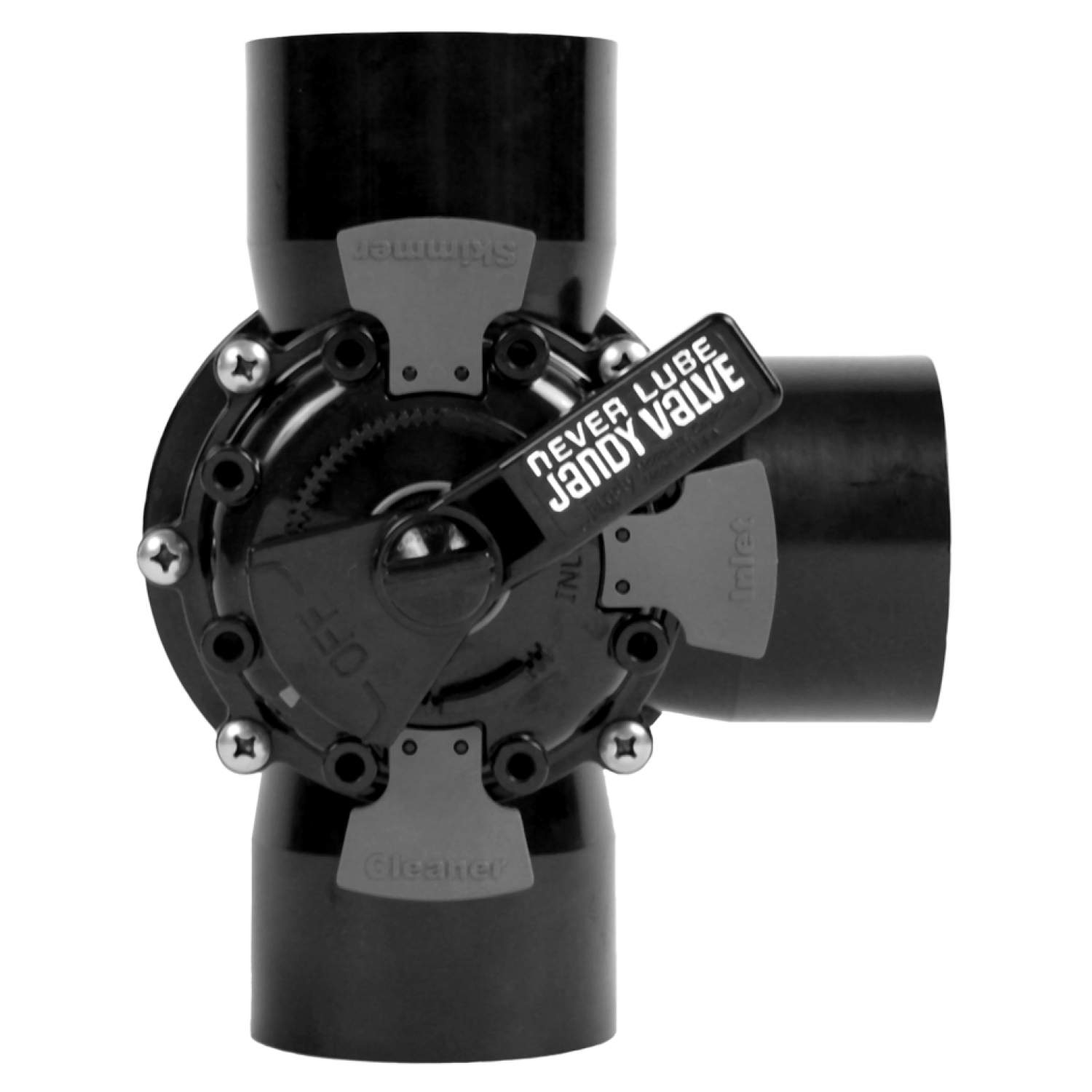
3-Way Diverter Valve
The diverter is the workhorse of the pad. It has three ports and a handle that turns to direct flow between them, which is how your system switches from pool to spa, draws from the skimmer or the main drain, or sends water out to a feature. The handle turns against a seal inside, and that is the part that wears. On a pool with a spa, this valve usually does the most work.
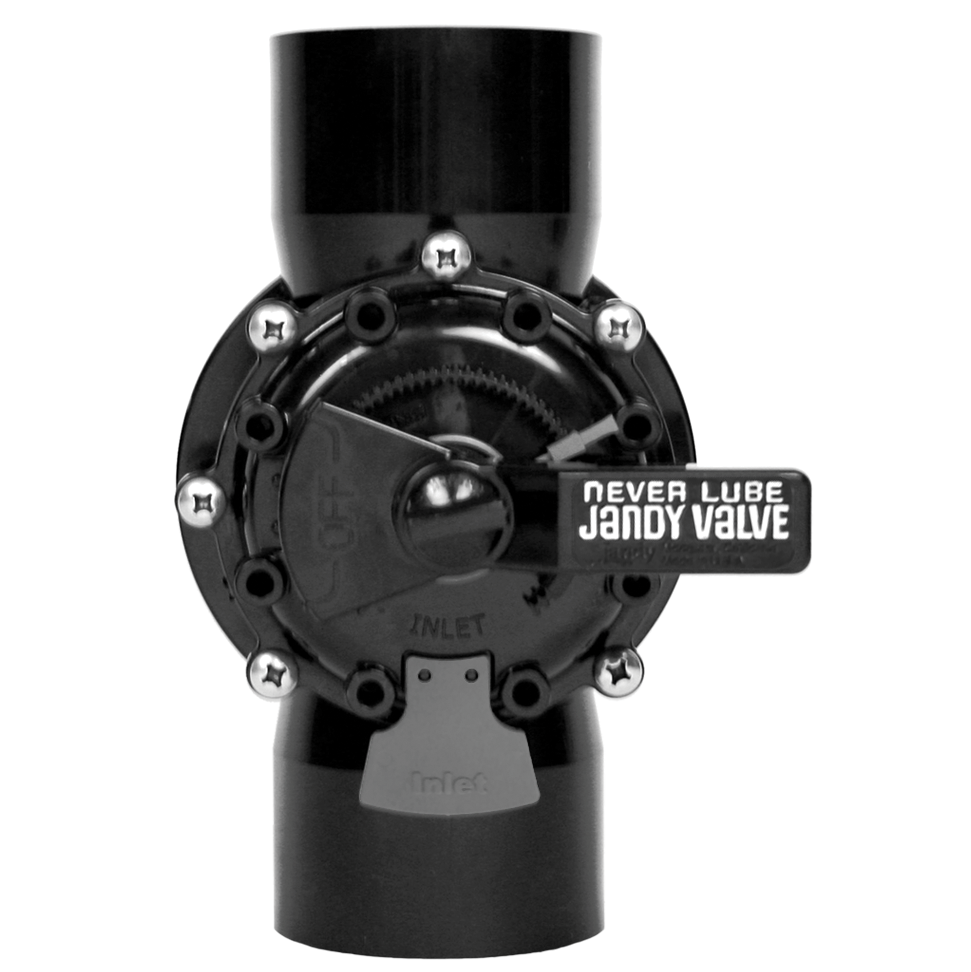
2-Way Diverter Valve
A two-way valve simply opens and closes a single line. It is what we use to stop flow to one part of the system, isolate a piece of equipment for service, or fine-tune how much water moves through a given line. Turn the handle and the water either passes through or it stops.
Check Valve
A check valve only lets water move in one direction. It stops the flow from running backward when the pump shuts off, which keeps the pump primed and protects equipment like a chlorinator or salt cell from a backflow of treated water. Many have a clear lid so the flapper inside can be inspected without opening the line.
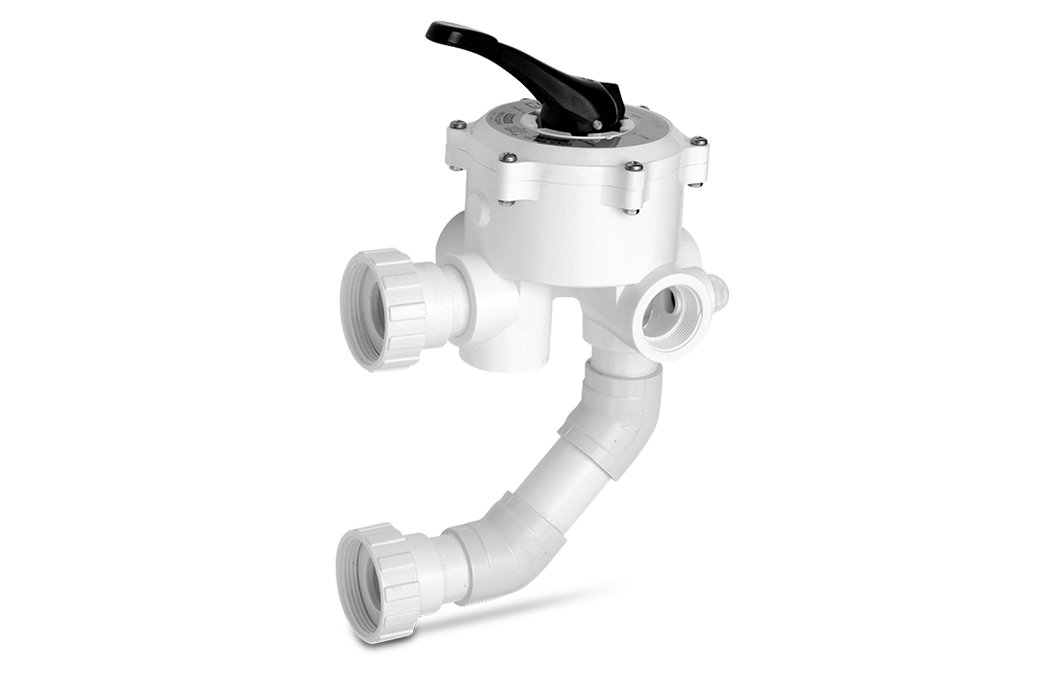
Multiport Valve
The multiport valve sits on top of a sand or DE filter, and its handle selects what the filter is doing: filtering, backwashing, rinsing, or sending water to waste. Inside is a part called the spider gasket. When that gasket wears out, water escapes to the backwash line while you filter, so you lose pressure and waste it at the same time.
The plumbing that connects these valves is mostly PVC pipe joined by fittings and unions, with the unions letting us open the system for service without cutting into the pipe. If you are not sure what is on your pad, or something is leaking or hard to turn, give us a call at 832-473-5715.
What are the signs your valves and plumbing need attention?
Valves and plumbing tend to fail slowly, and the early signs are easy to miss. Here are the most common ones, and what each usually points to.
A valve is leaking or dripping
If you see water dripping from a valve or pooling under one on the pad, a seal or the body has given out. Sometimes it is just an o-ring or a diverter seal that can be rebuilt with a kit. Other times the body has cracked and the valve needs to be replaced. Either way, a steady drip wastes water and should not be left.
The handle is stiff or hard to turn
A diverter handle that has gotten stiff usually means the seal inside is worn, swollen, or full of grit. On a maintenance-free valve, that is the sign the internal parts are due for a rebuild. Forcing a stuck handle can crack the body, so it is better to have it looked at than to muscle it.
Water reaches the spa when it should not
If your spa slowly fills or drains on its own, or the level changes when it should be holding, a diverter valve is most likely not sealing. A worn diverter lets water bleed between the pool and spa even when the valve is set correctly. This is common and fixable, usually a rebuild of the valve that is passing water.
Water runs out the backwash line while filtering
On a sand or DE filter, water leaving through the waste line while the valve is set to filter points to a worn spider gasket inside the multiport valve. You lose water and the filter cannot hold pressure. The gasket can be replaced, and on an older multiport it is sometimes worth swapping the whole valve.
Air bubbles or the pump losing its prime
Air in the pump basket or blowing out the return jets usually means air is getting pulled in on the suction side, often at a valve or a fitting between the pool and the pump. The same leak can make the pump struggle to hold prime. A suction-side air leak is worth tracking down, since it makes the pump work harder.
A wet spot or unexplained water loss
If your pool is losing more water than evaporation explains, or you find a soft wet area near the pad or along a plumbing run, you may have a leak in a line. Above ground at the pad these are usually straightforward. Underground, the line has to be located before it can be repaired, which we cover below.
Those are the most common signs, but not the only ones. Valves and plumbing tie into the rest of your equipment, so a symptom at one valve can start somewhere else. When something is off, a Pool Equipment Diagnostic is the place to start. We come out, find the cause, tell you what we found, and never begin work without your approval.
How we find and fix pool plumbing leaks.
Not every leak is at a valve. Your pool also has plumbing lines buried underground, running between the shell and the equipment pad. There is a suction side that pulls from the skimmer and main drain, a pressure side that returns filtered water through the jets, and separate lines for a spa or water feature. Any one of them can develop a leak on its own.
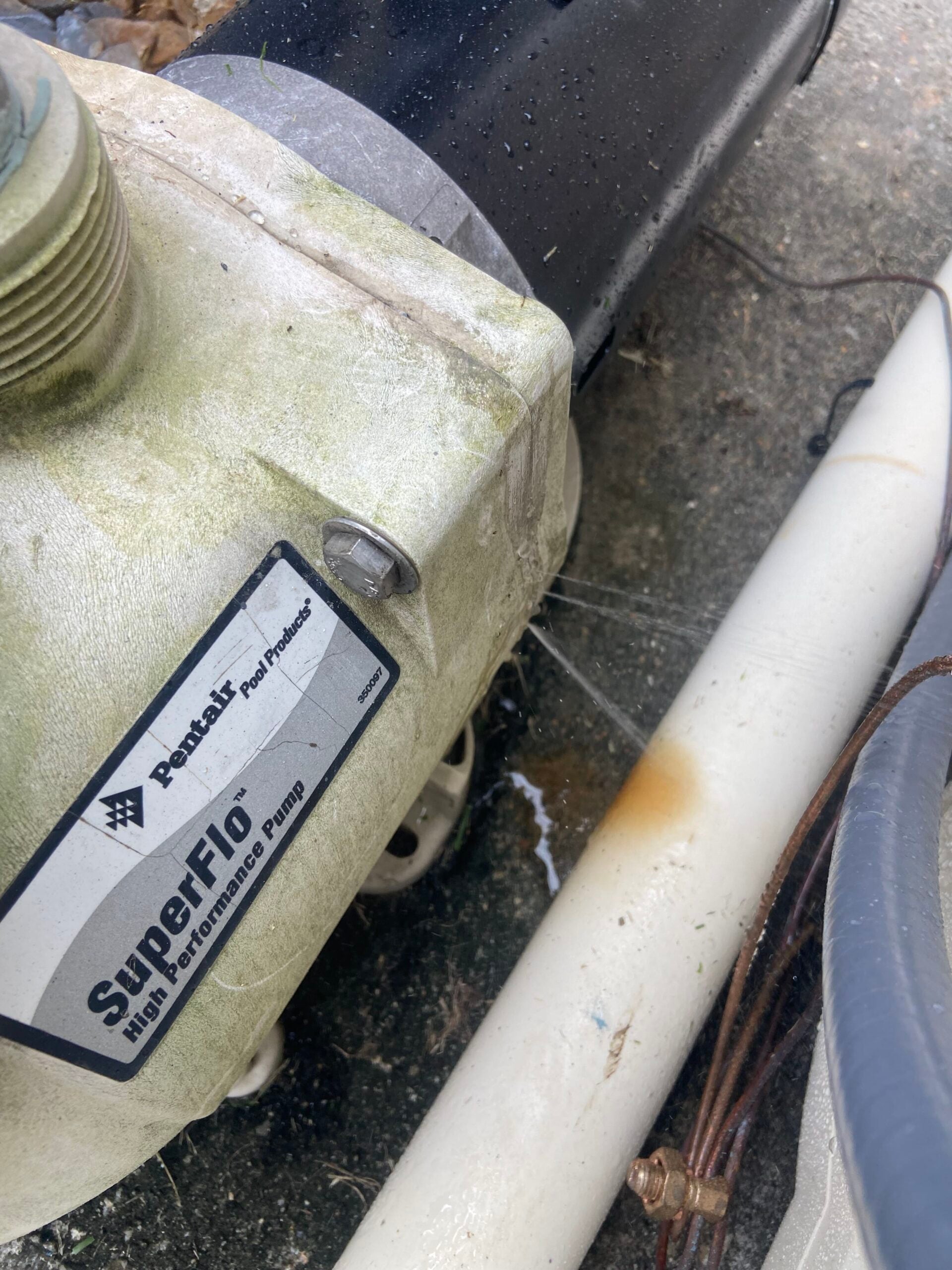
A few signs point toward the plumbing rather than the pool shell: losing more water than evaporation accounts for, air bubbles in the pump basket or return jets, the pump struggling to hold prime, soggy ground near the pad, or a water bill that climbs for no clear reason. One useful clue is when the loss happens. If the pool drops faster while the pump is running, the leak is likely on a pressure line. If it drops faster with the pump off, the shell is the more likely source.
When the leak is at the pad, a union, a valve, or a fitting, it is visible and usually a quick repair. When it is underground, we find it before we dig. We test the lines one at a time, sealing each one and putting it under pressure to watch whether it holds. A line that holds is sound; one that drops has a break. From there we use listening equipment to pinpoint the spot, so the repair is a small targeted dig rather than tearing up the whole run. It is rare that an entire line has to be replaced.
If you are losing water and cannot find the reason, or a valve or fitting has started to leak, give us a call and we will track it down.
Pool valve brands we install and service.
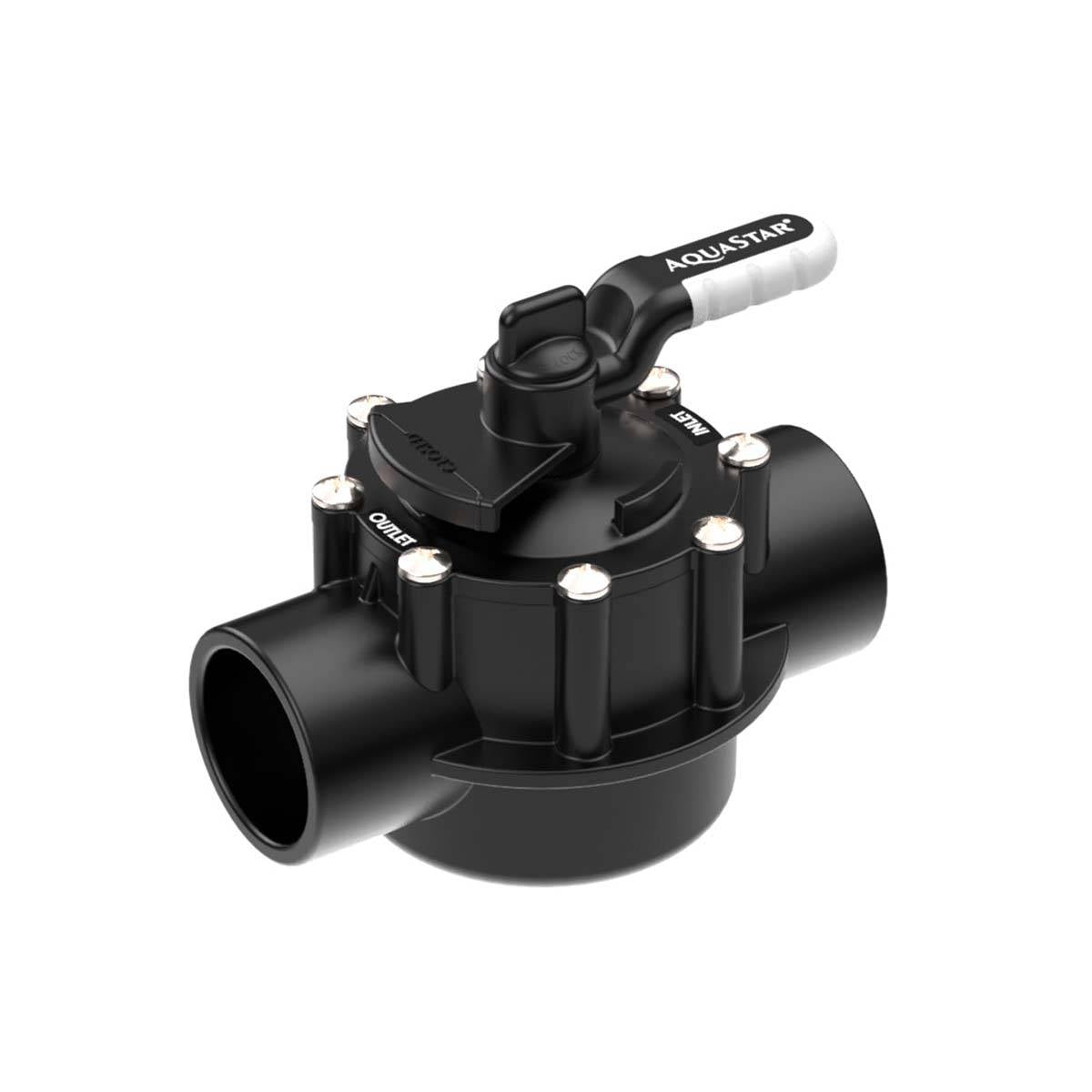
We install and service valves from the brands below, and we are an authorized provider for all of them. If you are not sure what you have, call us at 832-473-5715 and we can help you identify it.
 Our Pick
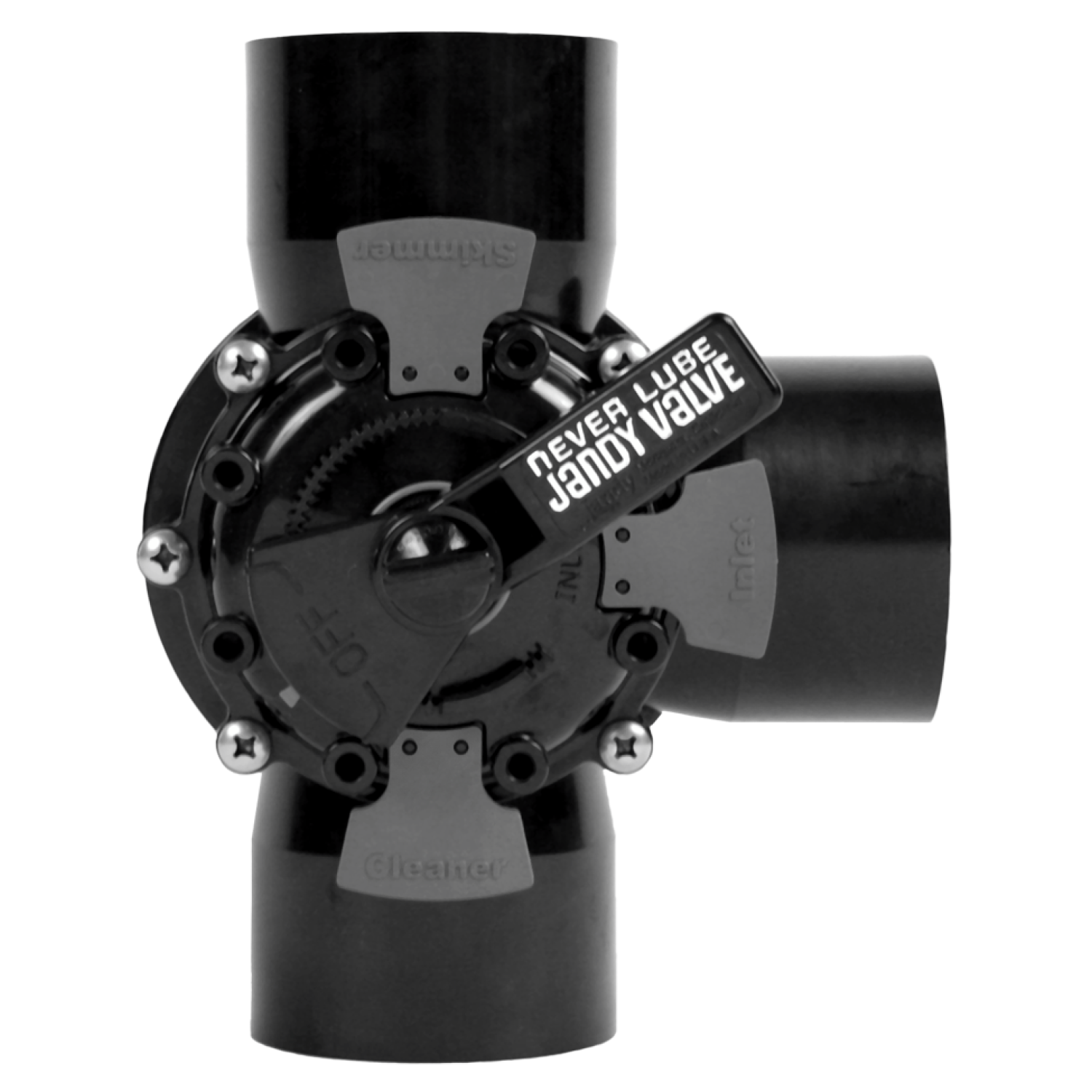
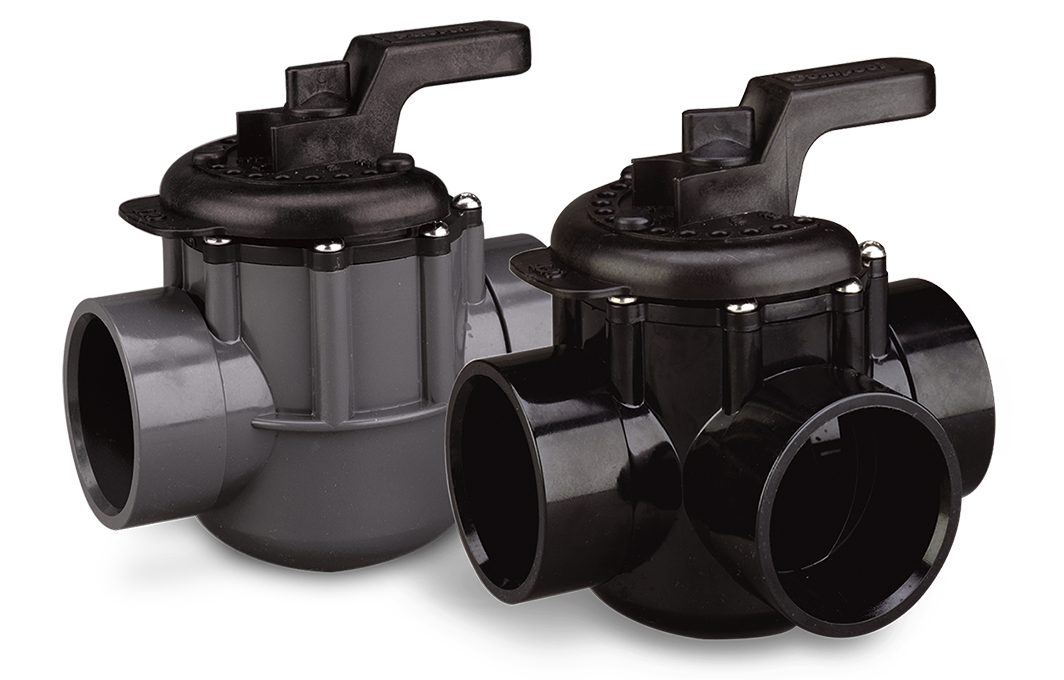
AquaStar and Jandy both back their valve body with a lifetime warranty against cracking, leaking, or breaking, with the wearing parts like diverter seals covered as a serviceable item. Any of these diverter valves can be motorized, and the actuators that do it are largely interchangeable at 24 volts, so one part can cover a mixed pad. If you want your valves automated, that ties into a full control system, which we cover on our pool automation page.
Frequently Asked
Questions about valves and plumbing.
Most valve repairs are on the smaller end of pool work, because a rebuild reuses the valve and just replaces the seal and o-rings inside. Replacing a whole valve or fixing a plumbing leak costs more, and an underground line leak depends on how much has to be located and dug up. We start every job with a Pool Equipment Diagnostic, then give you a price before any work begins.
Usually it can be repaired. Most valve leaks come from a worn seal or o-ring, and those can be rebuilt with a kit while the valve stays in place. If the body itself has cracked, the valve gets replaced instead. We can tell you which it is when we look at it, and the rebuild is the cheaper fix when it is an option.
Jandy makes the Never Lube, one of the most common diverter valves on residential pools, so a lot of people call any diverter a Jandy valve. It is built so the seal inside never needs greasing, which is where the name comes from. We service Jandy valves along with AquaStar, Pentair, and Hayward.
That is almost always a diverter valve that is no longer sealing. When the diverter seal wears, it lets water bleed between the pool and the spa, so the spa slowly fills or the two levels even out over time. Rebuilding the valve that is passing water fixes it. It is a common issue and not a sign of anything wrong with the spa itself.
Yes. Any diverter valve can be fitted with an actuator, a small motor that turns it for you on a schedule or from an app. It is a common upgrade when adding pool automation, and we can add an actuator to your existing valves or set up a full system. You can read more on our pool automation page.
Leaking valve, or a pool losing water?
If a valve is dripping, your spa will not hold water, you have air in the system, or your pool is losing water and you cannot find why, give us a call at 832-473-5715, or contact us online. We will schedule a Pool Equipment Diagnostic and find out what is going on.
Request Equipment Service