If your pool equipment is getting older, running louder, or costing more to operate, you might already know something is off. The question most homeowners ask us is: should I repair it or replace it?
After 15 years of servicing pools in League City, Friendswood, Pearland, Clear Lake, and surrounding areas, we have seen every type of equipment failure. In this guide, we share what we tell our own customers when they ask about upgrading pool equipment, and what we recommend for the Houston climate specifically.
We carry and install the longstanding “Big 3” brands, Hayward, Pentair, and Jandy, along with the brands earning a reputation as the “New 3”: Aquastar, Raypak (a Rheem company), and Poolside Tech. We recommend what is right for your pool, not just what we happen to stock.
Signs It Is Time to Replace Your Pool Equipment
Your Equipment Is Aging Out
On average, we see most equipment last 8 to 12 years. However, here on the Gulf Coast where we have extreme weather of all types and a 12-month pool season, we can see accelerated wear. If your pump, filter, or heater is well into that range, it is worth starting to budget for replacement even if it is still running.
Your Energy Bills Have Gone Up Without Explanation
Older single-speed pumps and worn motors draw significantly more electricity than they did when new. If your utility bill has crept up and nothing else has changed, your pool equipment could be the cause. A variable speed pump upgrade often pays for itself within two to three years in energy savings alone.
You Are Frequently Repairing the Same Equipment
One repair here and there is reasonable. But if you are having to frequently repair the same equipment, that is a sign it is aging out. At that point, the cost of ongoing repairs often approaches or exceeds the cost of a replacement, and a new unit comes with a warranty.
Water Quality Problems That Chemicals Cannot Fix
If your water stays cloudy or green even after correct chemical treatment, the filter or circulation system is likely the problem. A dirty or undersized filter, or a pump that is not turning over the right water volume, will undermine even perfect water chemistry.
Loud or Unusual Pump Noise
A healthy pool pump runs quietly. Grinding, screeching, or loud vibration usually points to worn bearings, a failing motor, or cavitation. Do not ignore this. Continued operation can damage the pump housing and connected plumbing.
Pool Pumps: Why Variable Speed Is the Only Real Choice Now
There are two types of pool pumps: single speed and variable speed (VS or VSF). The differences matter for your electric bill, your water quality, and your long-term costs.
Single Speed Pumps
Single speed pumps run at full power (3,450 rpm) every time they are on. They are not energy-efficient, and as they age, they become even less efficient. As of July 2021, a federal law phased out the manufacturing of single-speed pump motors over 1 hp. If you still have a single-speed pump, it is not a question of if you will replace it but when.
Our take: We do not recommend single-speed pumps for any new installation or replacement. The technology is outdated and the operating costs are higher.
Variable Speed and Variable Speed Flow Pumps
Variable speed pumps let you run at lower speeds for everyday circulation and ramp up only when needed. With properly programmed variable speed pumps, this produces significant energy savings, quieter operation, and better filtration, since water filters better at lower speeds over longer run times. A properly sized variable speed pump typically pays for itself in energy savings before the warranty expires.
For Texas pools, running a variable speed pump at lower speeds for 12 to 16 hours a day often beats running a single-speed pump at full blast for 8 hours. Your pool water stays cleaner and your electric bill stays lower.
The Aquastar Pipeline Pump is one of our go-to variable speed pumps. See our Pool Pumps page for the brands and models we install.
Pool Filters: D.E. vs. Cartridge
There are three types of pool filters: Diatomaceous Earth (D.E.), Cartridge, and Sand. We do not recommend sand filters for residential pools. Here is what you need to know about the two types that we recommend.
D.E. Filters
D.E. filters use a powder coating on internal grids to filter very fine particles from pool water. They can be backwashed for a quick clean but need to be fully disassembled and cleaned periodically. One thing to know: D.E. filters require the system to shut off for a few hours each night so the powder can settle and re-fluff. That means you cannot run your pool continuously, which limits some of the energy savings possible with a variable speed pump.
Cartridge Filters
Cartridge filters do not use D.E. powder. They filter slightly larger particles than D.E., though the difference is not noticeable for most pools. The advantages: no backwashing, less water waste, and you can run the pump 24 hours a day. That last point matters if you are pairing the filter with a variable speed pump.
Our take: We now recommend cartridge filters for most installations, especially when paired with a variable speed pump. They are easier to maintain, use less water, and allow for continuous circulation. We recommend cleaning your filter once every 3 months, especially here on the Gulf Coast. If you are fighting algae or have heavy debris, clean it more often. See our Filter Cleaning Service page to schedule.
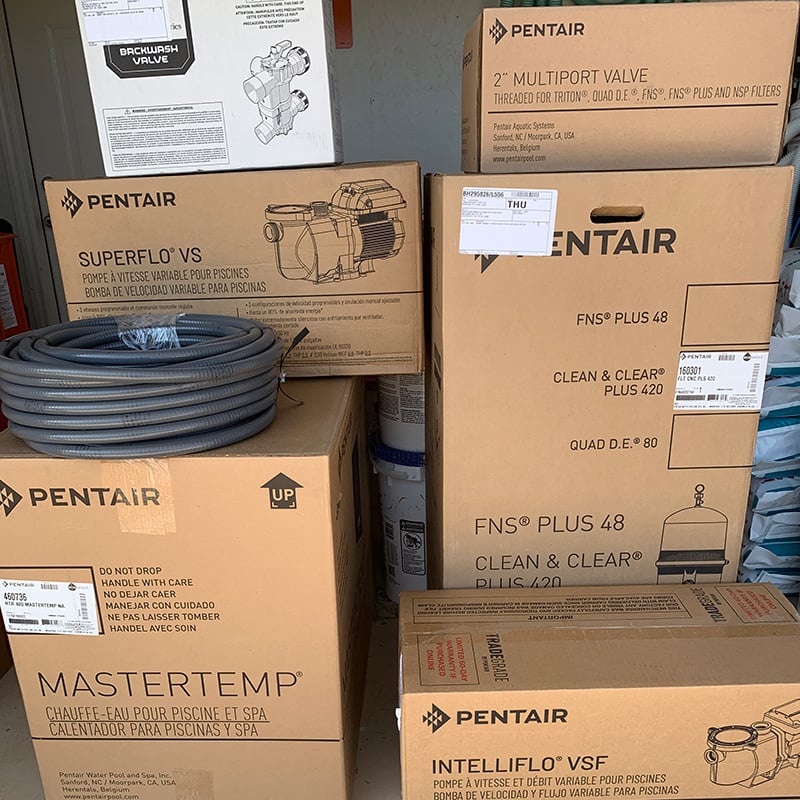
The Pool Boys are Authorized Dealers for Hayward, Pentair and Jand
Heating and Cooling Your Pool in Houston
Houston’s climate is one of the most demanding for pool equipment. Summers push pool water into the 90s, and our winters are mild but long enough to cut into the swim season without a heater.
Gas Heaters
Gas heaters heat water quickly and work even in cold weather. They are the right choice if you have a spa, since spas need to heat fast and hold temperature. A gas heater is expensive to run for a full pool but ideal for on-demand spa heating. The Raypak Avia is a strong choice in this category.
Electric Heat Pumps
Heat pumps are the better choice if you are looking to extend your pool season into the spring and fall. They use ambient air temperature to heat the water, which makes them efficient but slow. They are not effective when the outside temperature drops into the low 40s or below.
Chillers
In mid to late summer, your pool can feel like a bathtub. A chiller will drop the water temperature several degrees, which makes a real difference when the pool is sitting at 90 degrees. Chillers are worth it for Houston summers.
Our take: For a pool-only setup, a heat pump and chiller combination gives you year-round comfort. If you have a spa, add a gas heater to the mix. See our Pool Heaters and Chillers page for options.
Pool Automation Systems
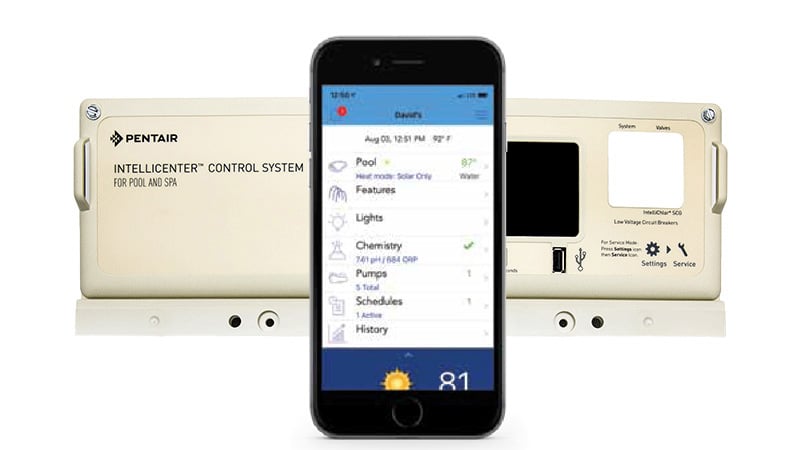
A pool automation system lets you control your pump, heater, lights, and other equipment from an app on your phone or tablet. Systems range from simple dual-timer setups to full home automation integration with Amazon Alexa and Google Home.
What Level of Automation Do You Need?
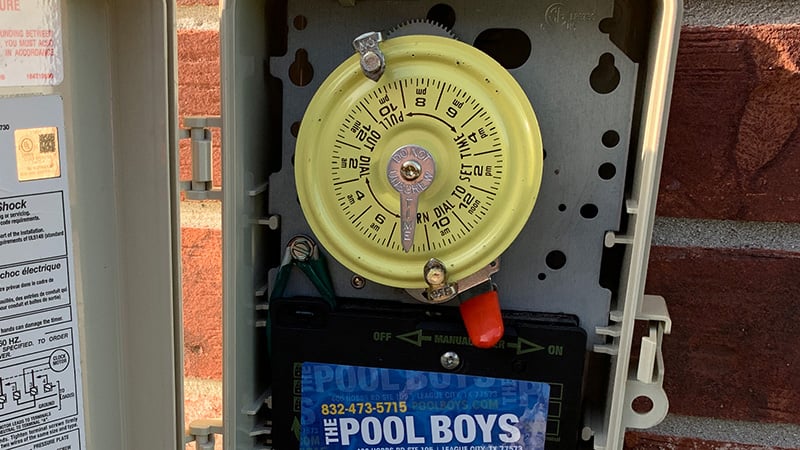
If you have a basic pool with one pump and no spa, a simple system like Poolside Tech’s The Attendant Mini is enough. It replaces a mechanical time clock and lets you control your pump remotely via app.
If you have a spa, multiple pumps, a heater, water features, or lights, you will benefit from a full automation system like the Pentair Intellicenter, Jandy Aqualink, Hayward Omnilogic, or our favorite, Poolside Tech’s The Attendant. These systems give you scheduling, temperature control, real-time monitoring, and integration with smart home devices.
Our take: Choose your other equipment first, then pick the level of automation that fits what you are controlling. Poolside Tech’s The Attendant is our go-to recommendation. See our Pool Automation page for a full breakdown.
Salt Systems vs. Chlorine: The Honest Answer
The number one misconception about salt systems is that they eliminate chlorine. They do not. A salt chlorine generator uses the salt in the water to produce chlorine. The water still contains chlorine, it is just produced on-site rather than added directly.
Why Salt Systems Have Advantages in Houston
In our market, pools run 12 months a year and heat accelerates the buildup of Cyanuric Acid (CYA) from chlorine tablets. CYA protects chlorine from the sun, but as levels rise, your chlorine becomes less effective. The only fix is to partially drain and refill the pool, sometimes multiple times per year.
Salt systems do not add CYA to the water, which reduces the need for partial drains. We find that our salt pools on our weekly pool care routes stay more consistently clean and clear than our chlorine tab pools. We highly recommend salt systems. The Hayward Aquarite S300 is one of the salt systems we install most often.
What Salt Systems Actually Cost
The salt itself is inexpensive. However, salt cells have an average lifespan of 3 to 5 years and can cost several hundred to over a thousand dollars to replace. This varies based on size and model. Be sure to factor this into your long-term cost comparison. Additionally, if you have natural stone around the pool, we recommend sealing it periodically to prevent any corrosion. This can be done fairly simply with a product like Deck O Seal or Encore Coating’s Seal Back Concrete Sealer.
Our take: We recommend salt systems for most pools in our service area. See our Salt Systems page for brands and installation options.
Pool Cleaners: Which Type Is Worth It?
There are three types of automatic pool cleaners: pressure side, suction side, and robotic.
Suction side cleaners are the cheapest option and in our opinion the least effective. We do not sell them and do not recommend them in our market.
Pressure side cleaners use water pressure from circulation to move around the pool and collect debris. The Polaris 280 is the tried-and-true go-to model, with the Polaris Quattro available as a premium option. Most pressure side cleaners require a separate booster pump, which adds cost and another piece of equipment to maintain.
Robotic cleaners operate independently of your circulation system, scrub the floor, walls, and tile line, and do not reduce filtration efficiency. The downside is you need to place them in the pool manually. Most homeowners use them two to three times per week and store them in between, which extends the cleaner’s lifespan significantly.
Our take: Here in our market, we recommend pressure side and robotic cleaners. With robotic cleaners, make sure you don’t leave them in the pool 24/7, as this shortens their lifespan.
Should You Repair or Replace? How We Help You Decide
When it comes to deciding whether to repair or replace your equipment, there are a couple of things to consider. First is the cost of the repair compared to the replacement. If the repair cost is over 50% of the cost of replacement, then replacement is usually the better investment. The second thing to consider is the age of the equipment. If it is getting older, it may be time to get a new replacement with a manufacturer warranty for peace of mind.
Schedule an OnPoint Equipment Inspection
The Pool Boys offer professional equipment inspections throughout League City, Friendswood, Pearland, Clear Lake, and surrounding areas. Our licensed technicians give you an honest assessment of what needs attention and what can wait. Call 832-473-5715 or visit our Equipment Inspection page to schedule.
Frequently Asked Questions
How long does pool equipment last in Houston?
On average, most equipment lasts 8 to 12 years. Here on the Gulf Coast, our extreme weather and 12-month pool season can accelerate wear, so replacement timing varies from pool to pool.
Do I need to replace everything at once?
No. Most homeowners replace one piece at a time as equipment reaches end of life. If you are doing a full pad replacement or remodel, bundling everything at once saves on labor.
Is a variable speed pump worth it in Texas?
Yes. Texas pools run nearly year-round and the energy savings add up fast. Most homeowners recoup the cost in under three years.
Can I control my pool with my phone?
Yes. Entry-level systems like Poolside Tech’s The Attendant Mini give you remote pump control via app. Full automation systems let you control pump speeds, heater temperature, lights, and water features from your phone.