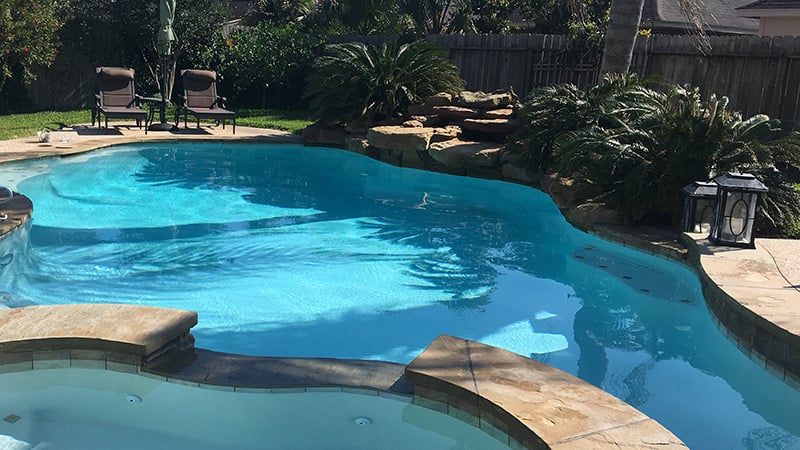
Living in the Gulf Coast region brings about some challenges for swimming pool owners in regard to weather. Not only do we get frequent storms dipping down from the north, bringing tornadoes in the summer and freezing temperatures in the winter across this part of Texas. But more importantly, we are a prime target for Hurricanes and Tropical Storms along the Gulf of Mexico, as witnessed recently with Hurricane Harvey.
This week, we take a look at what to do to prepare your pool for a storm, and what to look for after a storm passes to get your pool chemistry back in shape.
Pool Preparation Before a Storm
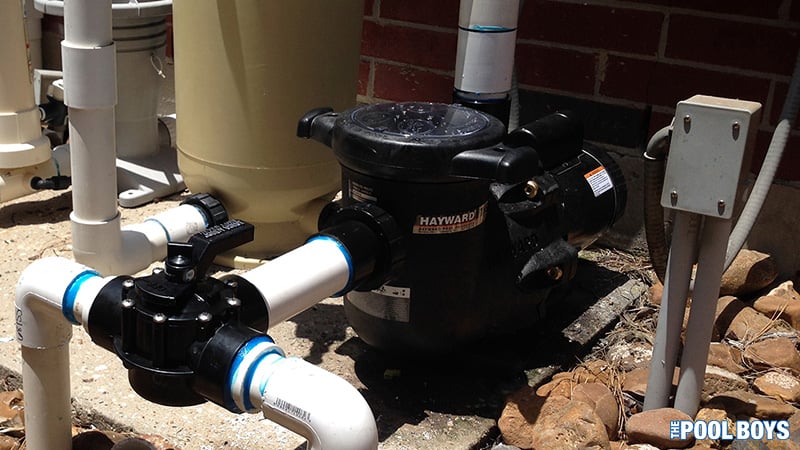
Hard Freeze – Let’s start with a hard freeze warning. I want to preface this by saying, I personally know people that live much farther north than we do and they don’t usually have a problem with pool equipment pipes freezing as long as you leave the pump running while the temperature remains below 32F degrees.
- Run main circulation pump and any secondary water feature pumps, no need to run the booster pump.
- Most automation systems have “Freeze Protection” which will automatically kick the main circulation pump on once the temperature drops to a certain level. These are generally set to around 37 Degrees from the factory. May need to be programmed to turn on any secondary water feature pumps. This will not work properly if you have a faulty air sensor that is not reading the correct temperature.
- Remove your pool cleaner – Polaris, Maytronics, Etc. and store it somewhere out of the freezing weather such as your garage.
- For additional coverage you can wrap smaller pipes with foam, cover pipes with heavy blankets if you start to see freezing in the pool.
Flood or Heavy Rains
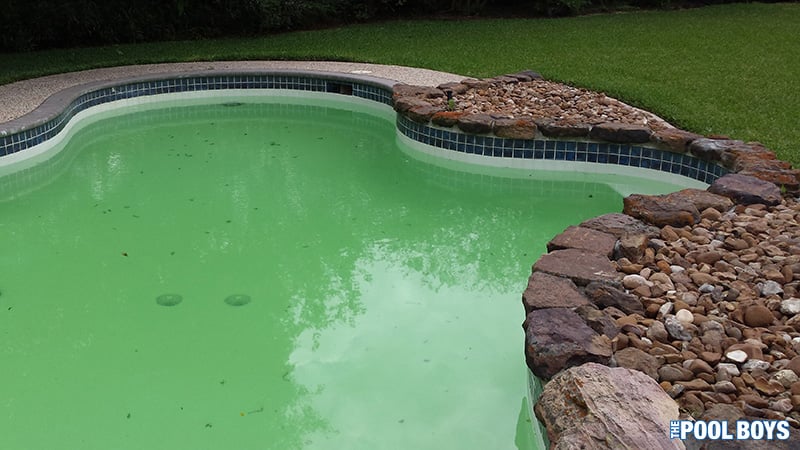
Just because your pool water is clear after a storm doesn’t mean that your chemistry is correct. It is important to get your water back in balance quickly to prevent damage to your pool surface and pool equipment, and sanitize any possibly contaminated water.
Rain is acidic and will lower your pH and Alkalinity. If the pH drops too low, the water in your pool will become acidic (low pH generally makes the water look really clear), and will start to deteriorate your pool surface and eat up your pool equipment. In severe cases, the copper heat exchanger in your heater can go out and result in a very expensive repair or replacement, costing thousands of dollars.
- Heavy rains will deplete many of the chemistry levels in your pool. Generally your alkalinity will drop significantly.
- It is a good idea to have Alkalinity, Muriatic Acid, Chlorine (or Salt), and Shock on hand to be able to test your water and treat your pool immediately after the rain stops.
- Keep in mind we aren’t just dealing with rain from the sky but also runoff from your roof, patio, landscaping, etc. which can also carry a wide variety of contaminants that will affect your water chemistry in many different ways.
- Monitor your water level, if there is enough rain your pool could overflow. If you have a “Waste” or “Backwash” line you can drain a little water off as the pool gets full.
- Be careful not to drain the pool below the skimmer openings, this could result in the pump catching air, causing damage to equipment, or potential damage to the structure.
Tropical Storms – Hurricanes – High Winds
When a big storm such as a Tropical Storm or Hurricane is on track to hit, there are several things you can do to prepare your pool area.
- Give your pool a good shock treatment 1 to 2 days before the storm hits. You can bring the chlorine level up some to prolong the pool being depleted of chlorine. Run the pool for about 24hrs after the shock treatment to allow the treatment to make its way throughout the entire pool.
- Secure all patio furniture and other items that could be blown around by the wind. You don’t want anyone to get hurt or any property to get damaged by something that is picked up and thrown by heavy winds.
- Remove your pool cleaner and store in your garage or shed.
- A few hours before the storm hits turn off your pool equipment at the breaker. This will help prevent damage to electrical components such as automation systems, heater electronics, and pump motors. If your pump motor gets submerged with water and is trying to run it will go out and need to be replaced.
- In the event that your pool is going to overflow you can turn the power on to the equipment and run the pump in “waste” or “backwash” just long enough to bring the water down a few inches. This only applies if there is a break in the storm and it is safe to go outside. If your pump is submerged just leave the equipment off and the pool will have to overflow. Please DO NOT put yourself at risk to work on your pool.
Pool Water After a Storm
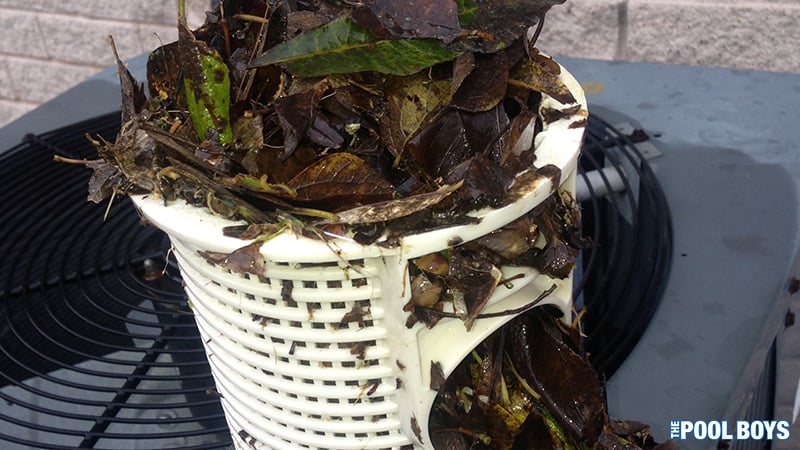
- It is a good idea to clean or backwash your filter after a heavy rain, flood, or major storm. This will help prevent your pool from turning cloudy or green. If your filter needs a deeper service, our filter cleaning service can handle it.
- Clean out the debris in all of your baskets.
- Use a net or vacuum to get all debris out of the pool. You want to get the debris out of your pool as soon as possible. The longer debris sits in the pool the more likely you are to get stains and have unbalanced water chemistry. Don’t wait for your pool cleaner robot to pick the debris up.
- After the debris has been cleared brush down the walls and the top of any steps and benches.
Complete the previous steps as quickly as possible and then test your water chemistry. Make any necessary adjustments to your pH and Alkalinity. Once the pH and Alkalinity are adjusted you can then shock your pool. The shock treatment will spike the chlorine level and oxidize your water. Let the pool run for 24hrs and monitor your filter pressure. After 24hrs, re-test your chemistry and make any final adjustments.
Here’s just a few of the pool chemicals you might need to pick up after a heavy rain:
- Chlorine or Salt
- Shock
- Alkalinity
- Muriatic Acid
- Calcium Increaser (Generally after a major storm such as a Hurricane)
- Cyanuric Acid (Generally after a major storm such as a Hurricane)
- Phosphate Remover (Only necessary if the phosphate level has increased as a result of the storm)
- Algaecide (If your pool has started showing signs of Yellow, Green, or Black Algae)
If This is All Too Much, Just Give The Pool Boys a Call
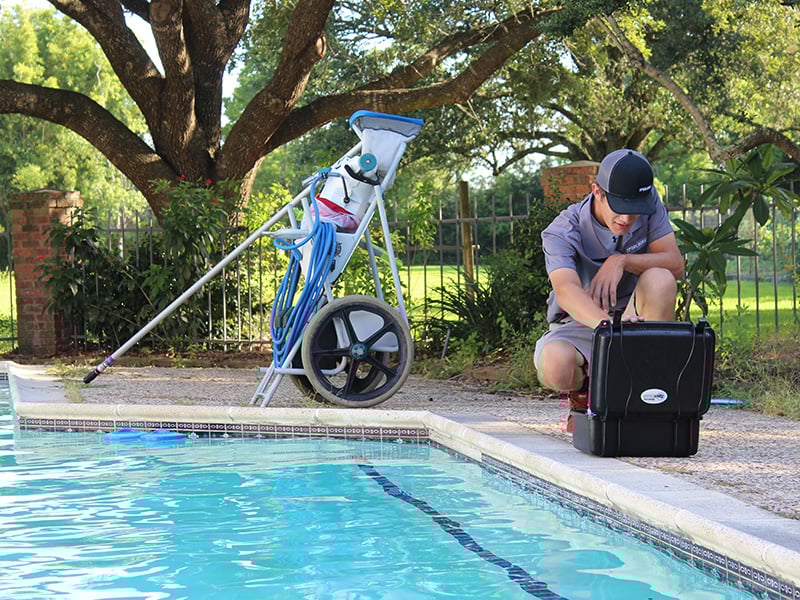
Hopefully this gives you a basic guide on what to do when a storm is approaching to secure your pool, or prevent damage during a storm. If dealing with Pool Chemistry and Filter Cleans are a bit too much, give The Pool Boys a call at 832-473-5715 and we’ll be happy to help. Ask about our weekly pool service to keep your water balanced year round. If you have an issue with your equipment that requires a service call, contact us to get on the schedule asap.
Thanks!
Zac & Justin
Frequently Asked Questions
Should I shock my pool before or after rain?
Do both if you can. Shock 1 to 2 days before a big storm to build up a chlorine buffer, then shock again after the rain stops once you have adjusted pH and alkalinity. Make sure to always test your levels before adding chemicals so that you know what the levels will be after any chemical additions. Rain depletes chlorine and throws off your chemistry, so the after-storm shock is the one that actually rebalances the water.
Should I shock my pool before it rains?
Yes, for a major storm or hurricane. Bringing the chlorine level up some 1 to 2 days ahead helps prevent the pool from bottoming out on chlorine during the storm. Run the pump about 24 hours after shocking so it circulates fully. For normal light rain this is not necessary.
What should I put in my pool after heavy rain?
Test first, then adjust in this order: alkalinity, pH, then shock. Always test your water prior to adjusting your chemicals so that you know what the levels will be after adding. Keep alkalinity increaser, muriatic acid, chlorine or salt, and shock on hand. After a major storm you may also need calcium increaser, cyanuric acid, and algaecide if the water shows signs of algae.
Why did my pool turn green after rain?
Rain dilutes and depletes your chlorine while washing in contaminants and phosphates that feed algae. Once free chlorine drops too low, algae takes over fast. Clean out debris, brush the walls, balance pH and alkalinity, then shock and run the pump for 24 hours to clear it. Keep an eye on the filter pressure as the pool clears up, as it may rise. Clean the filter once your pool is clear or once the pressure rises 7 to 10 psi over the starting pressure (pressure after a fresh cleaning), whichever comes first.
Should I run my pool pump when it rains?
During normal rain, yes, keeping the pump running helps circulate and filter out contaminants. During a tropical storm or hurricane, no, shut the equipment off at the breaker a few hours before it hits so a submerged pump motor does not burn out.
How long after rain should I wait to test pool water?
Wait until the rain fully stops, clear the debris, then test right away. The sooner you rebalance pH and alkalinity, the less risk to your pool surface and equipment. Re-test again 24 hours after shocking to confirm your levels held.
How do I clean my pool after a rain or storm?
Clean or backwash the filter, empty all baskets, net or vacuum out the debris, and brush the walls and steps. Then test and balance the water, shock it, and run the pump for 24 hours. Do not wait on a robotic cleaner to handle storm debris.
How do I prepare my pool before a hurricane?
Shock the pool 1 to 2 days out, secure all patio furniture and loose items, remove and store your pool cleaner, and turn the equipment off at the breaker a few hours before landfall. Do not lower the water yourself once the storm is active unless it is safe to do so. Also, do not drain the water in your pool below the skimmer as it can cause damage to the equipment and structure.